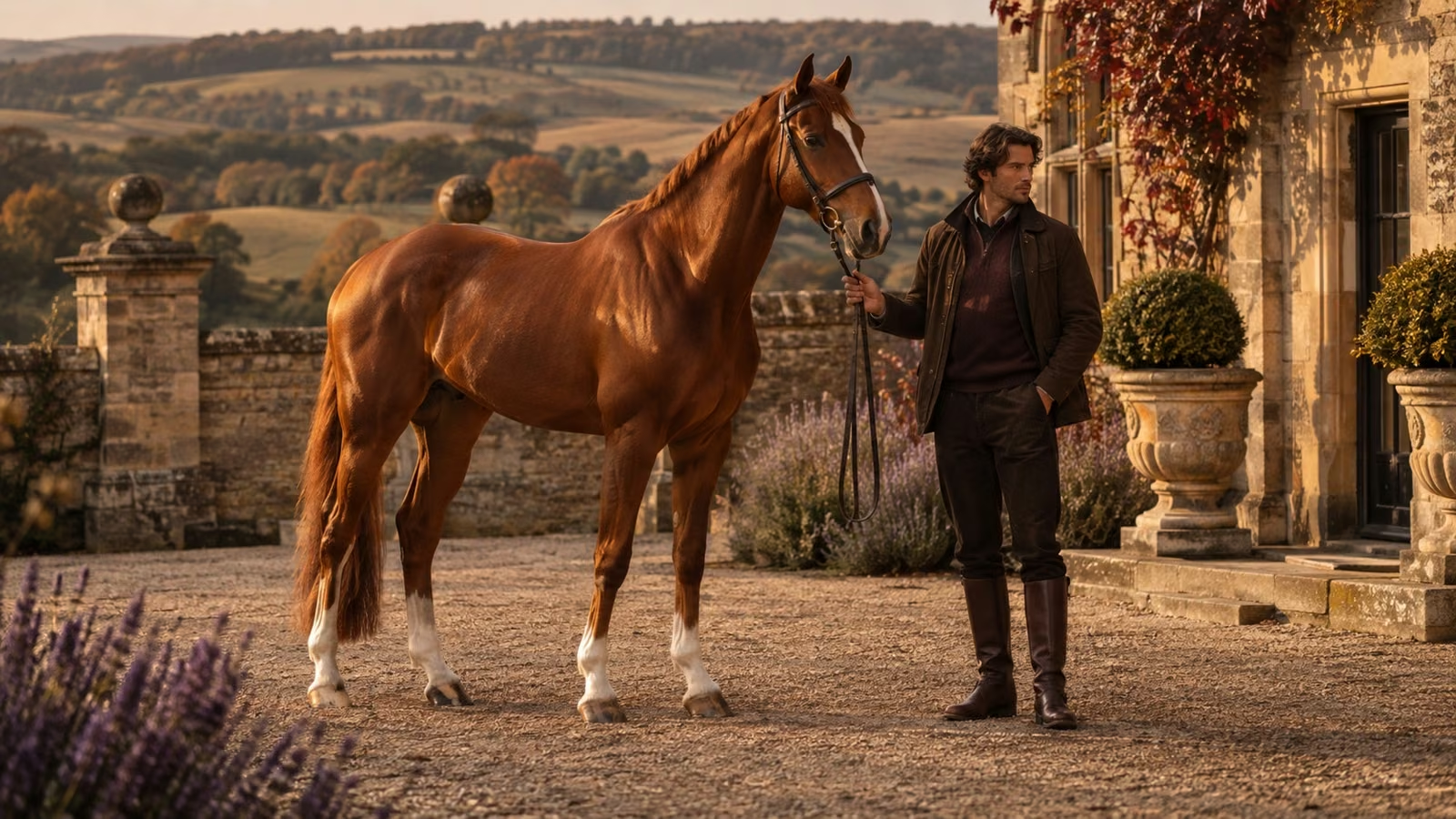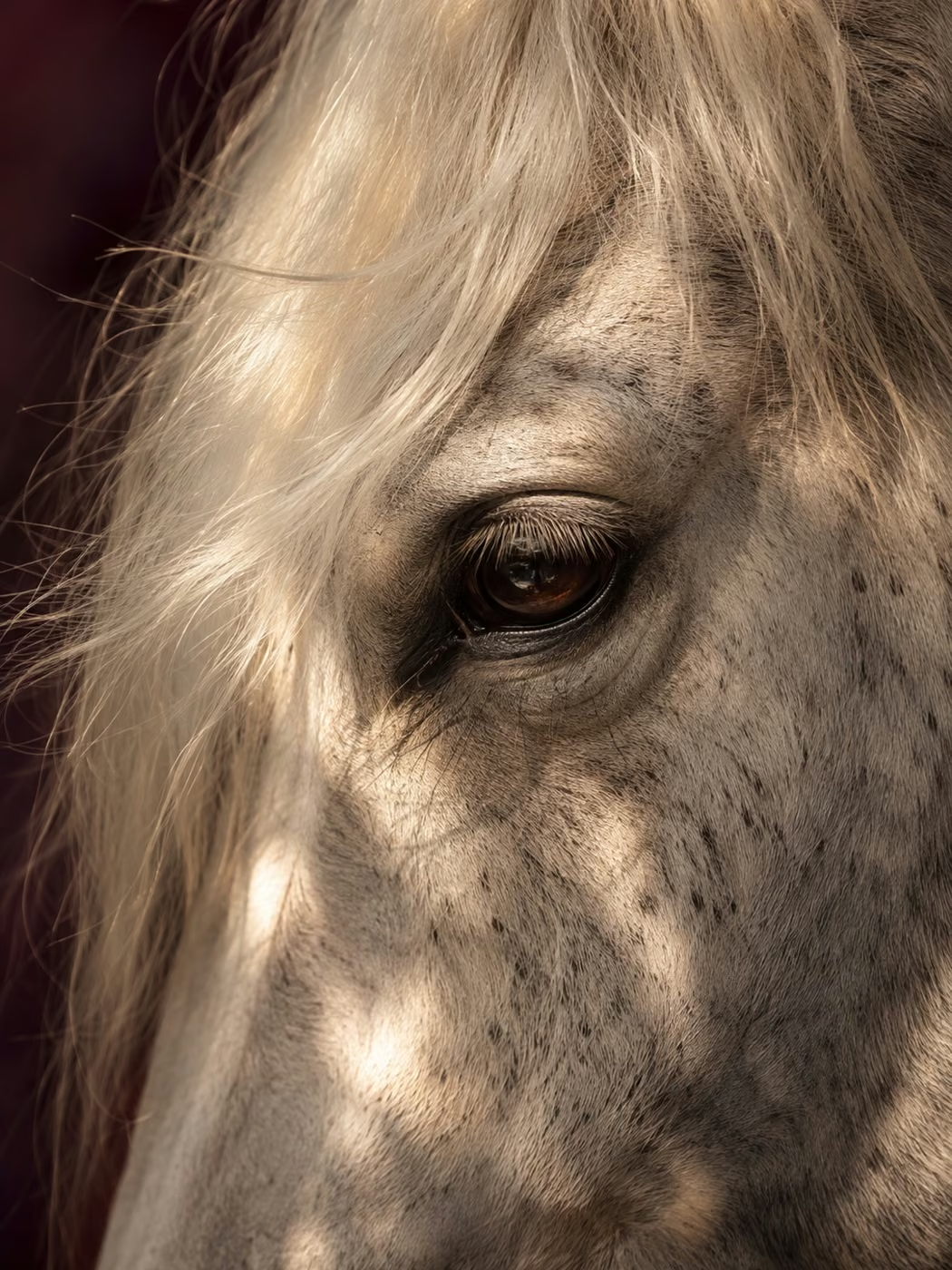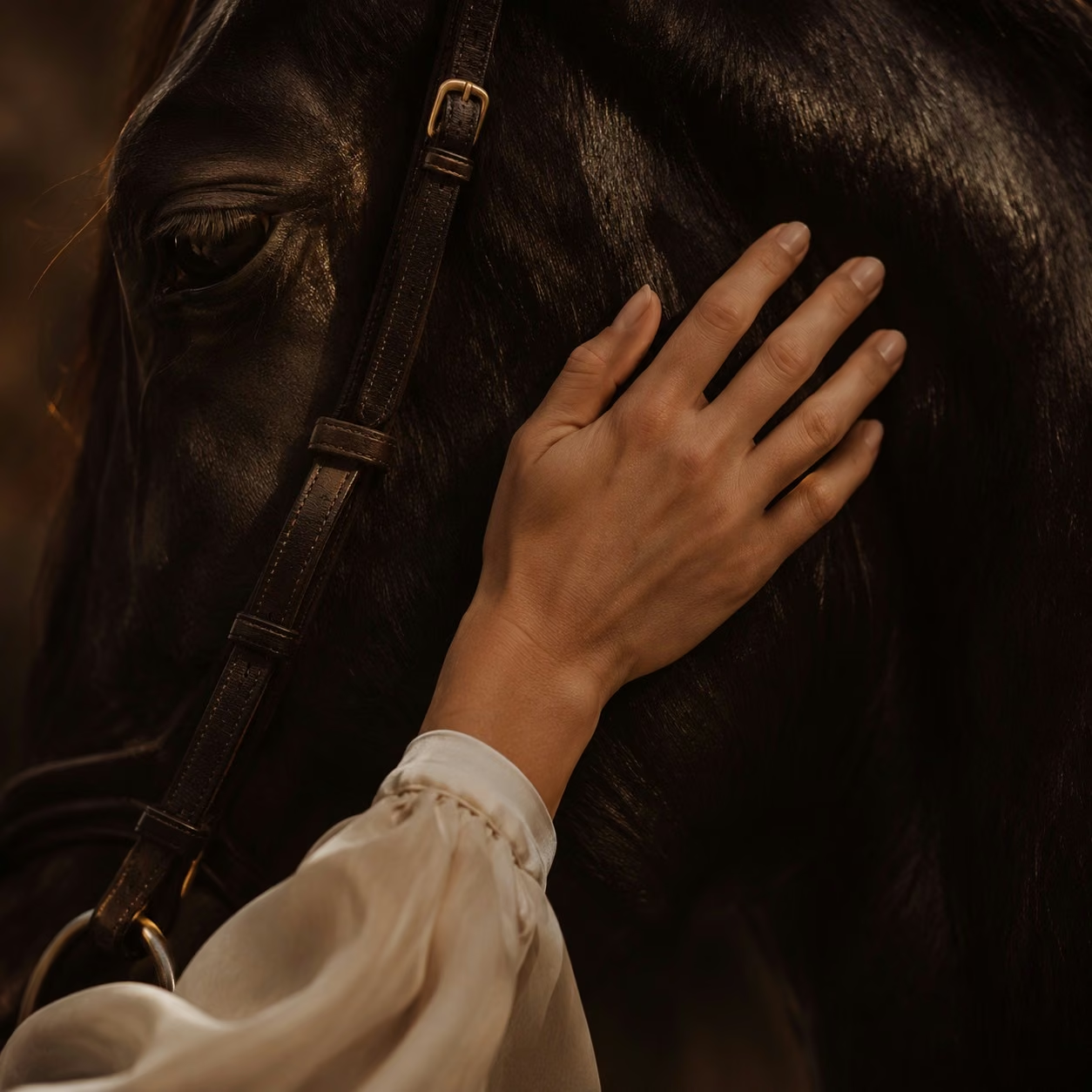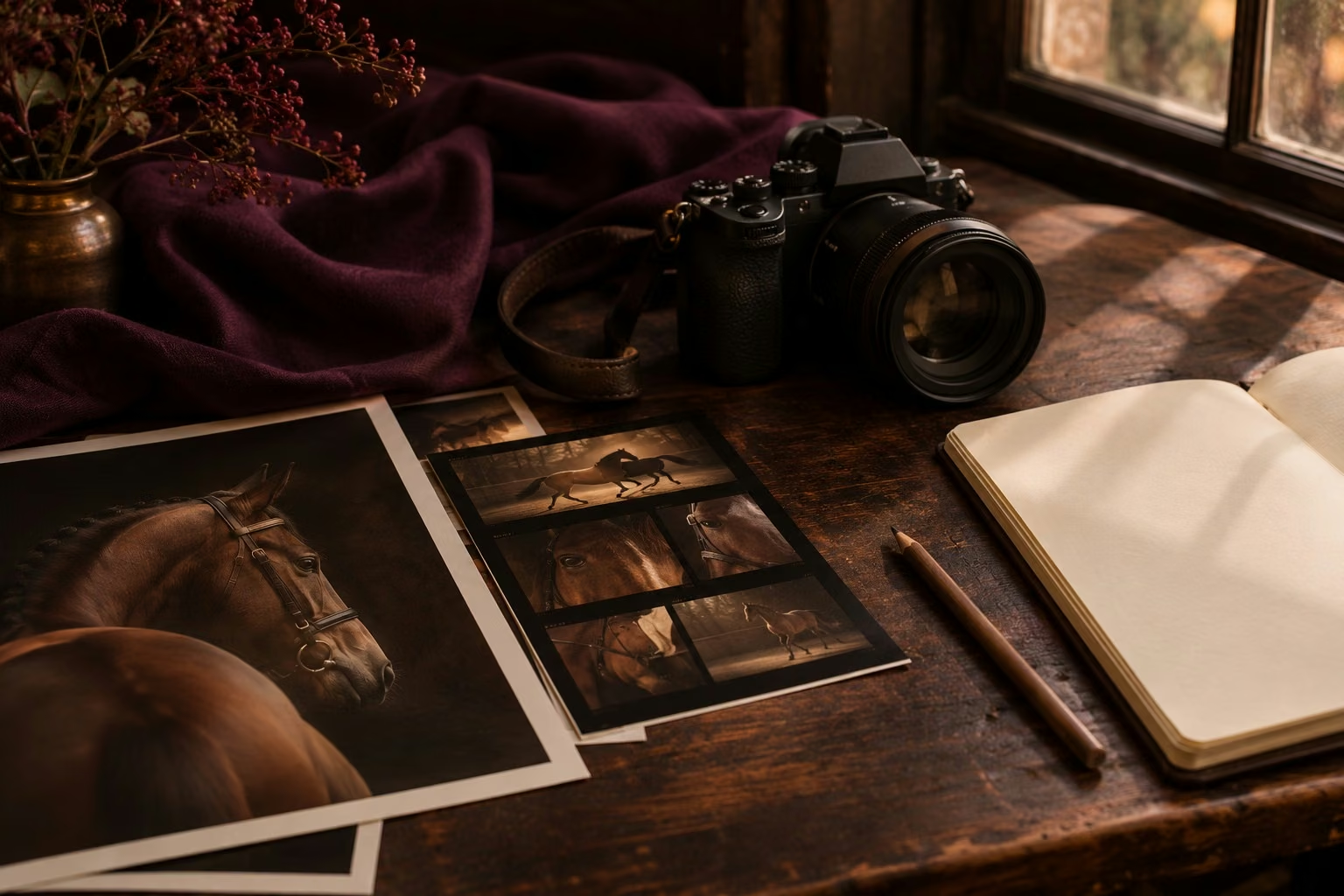
Begin with a rhythm.
A lifted stride and a still portrait invite different kinds of attention. Their differences can give a collection movement without making every photograph equally intense.
Lay out the images together before choosing an opening. The most dramatic frame is not automatically the one that introduces the world most clearly.
Make room for the quiet.
A detail of mane, leather or a hand at rest can create an interval between wider scenes. It contributes through what it reveals rather than through a stronger action.
Consider the relationship between adjacent photographs. A visual echo can create continuity, while a change in distance can give the next image more room.
Leave a feeling, rather than an explanation.
The closing image can return to an earlier observation or offer a new distance from the same world. It does not need to summarise every idea in the collection.
Review the complete sequence once more. Keep frames that bring something distinct, including those whose contribution becomes apparent only beside another image.