Start with a simple task
In an early rehearsal, two dancers stand a few steps apart. The task is simple: cross the room without deciding who will move first. At first there are little collisions of intention. Then something quieter happens. A shift of weight becomes legible, and one dancer follows a choice the other has barely made.
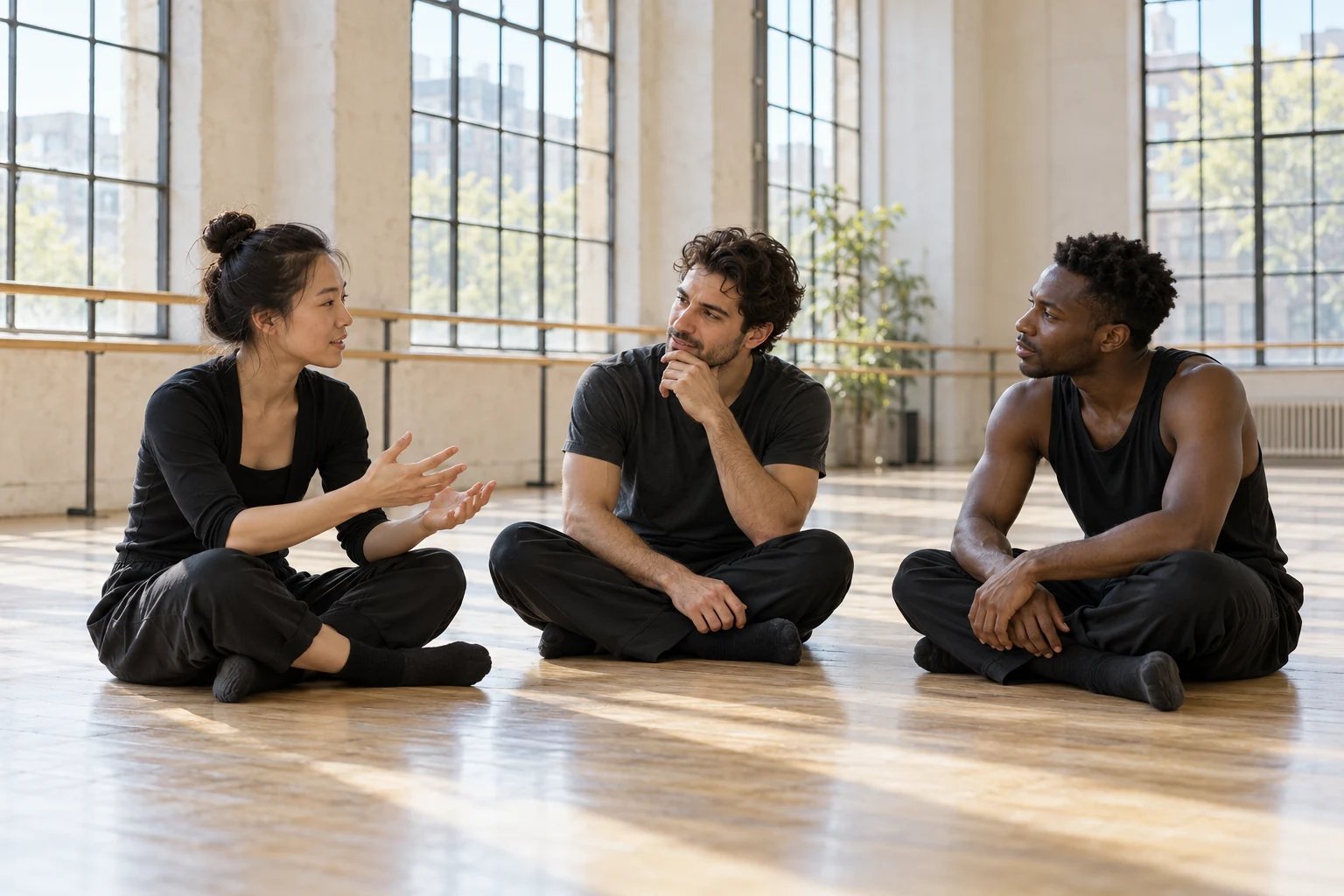
This is how much of In the Between began. Lena Berg offered practical situations rather than finished phrases: share a centre, keep a distance, let the other person change your direction. The task gave everyone something concrete to do while leaving the relationship open.
Listening with the whole body
We often talk about listening as an activity of the ear. In a duet, it can happen through a shoulder, a hand or a small change in the floor. Malik Adeyemi describes attention as something that moves between partners, becoming more precise with time.
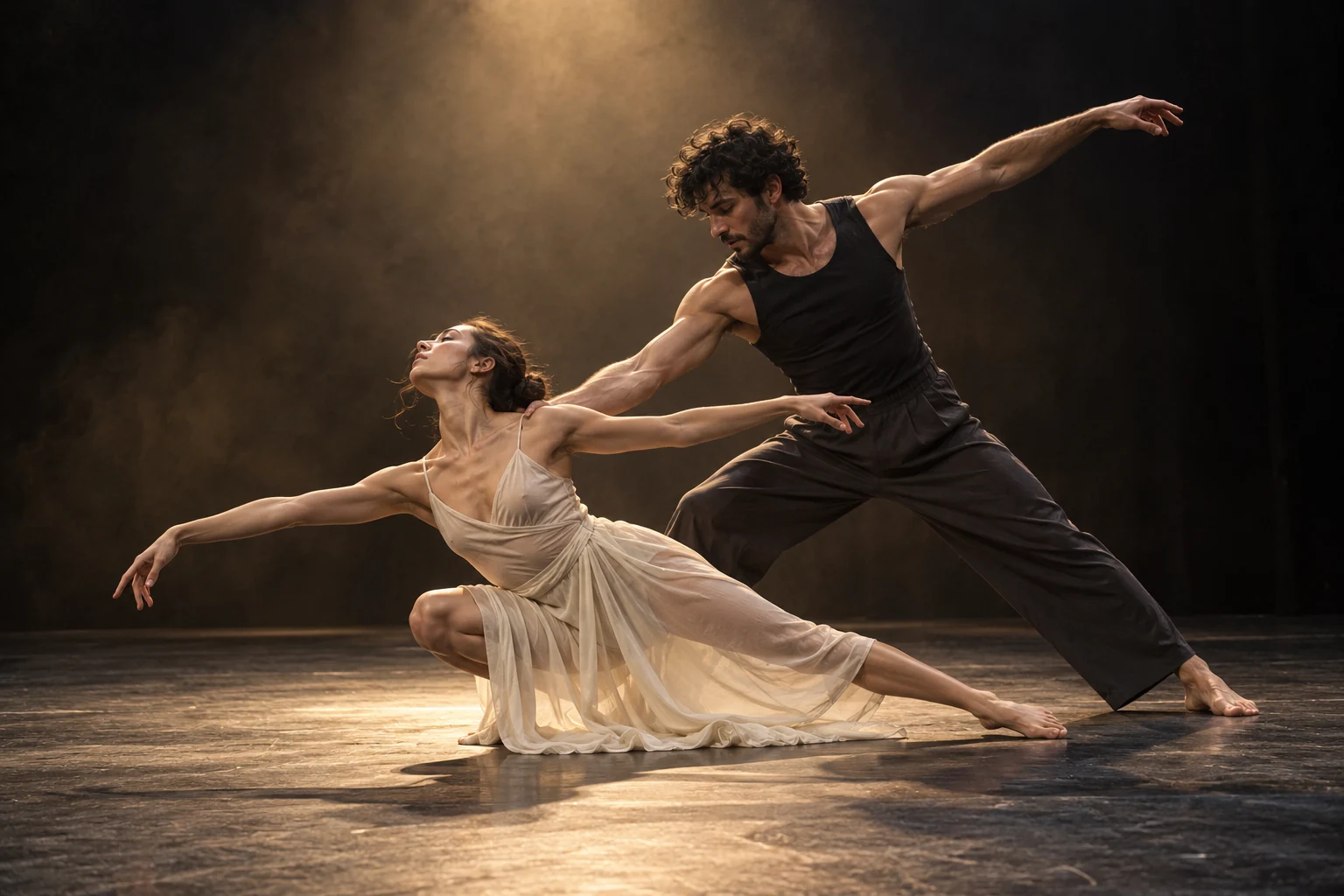
The visible result can look effortless, but the work underneath is full of decisions. How much weight is enough? When does support become restriction? What happens if a familiar response is delayed?
Keep the uncertainty
As the piece took shape, some passages became tightly scored. Others kept a measure of uncertainty so that the dancers would have to remain in conversation. The aim was to give trust something real to do each night.
That is an invitation for the audience too. There is no need to assign a fixed story to each gesture. You might notice a different relationship on a second viewing, or find that a tiny moment stays with you after the larger phrases have faded.
An original fictional editorial story written for the Kinesis theme.
Back to the journal