A room you almost recognise
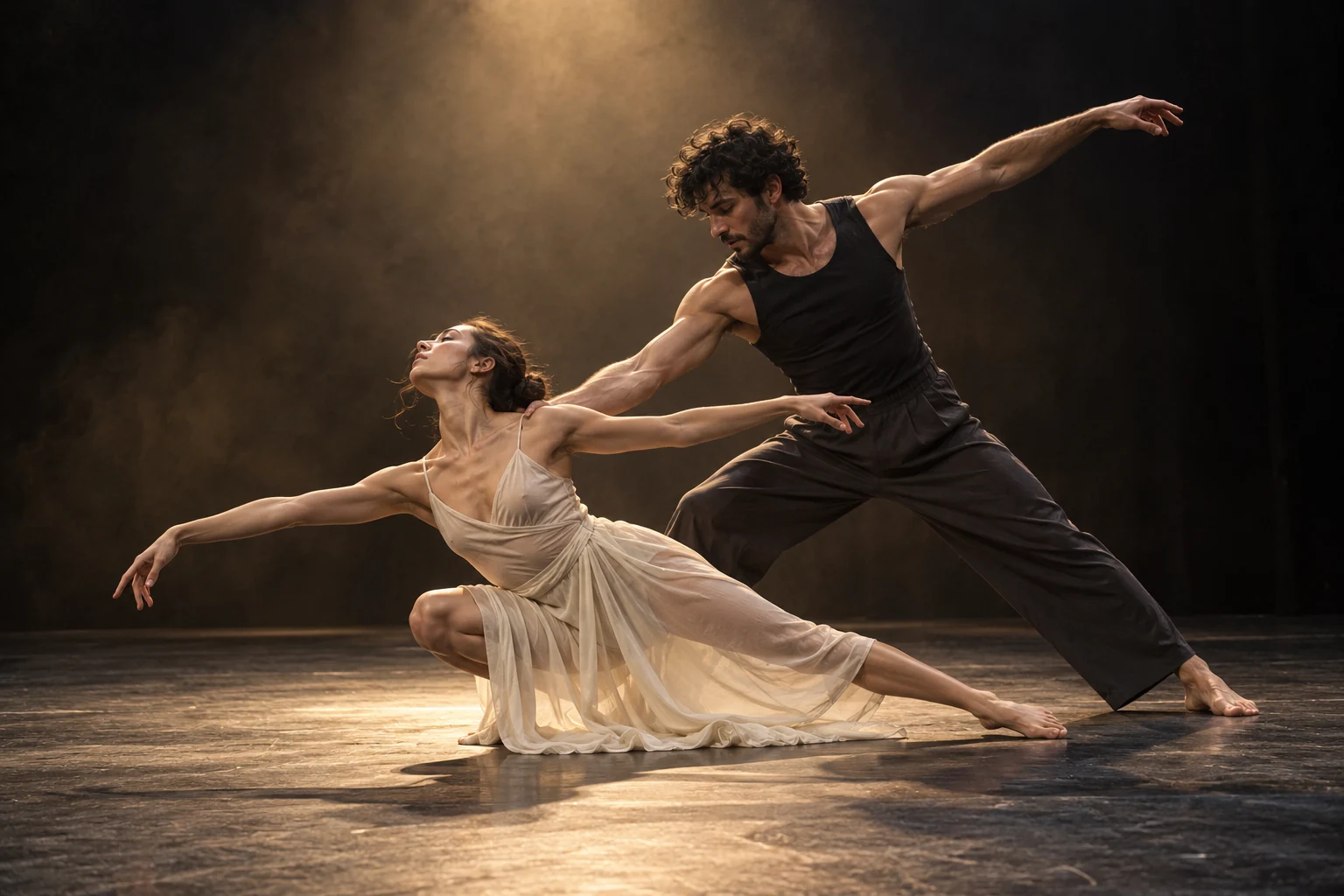
Blue Hours began with an image: a familiar room seen just before nightfall. Nothing has moved, but its edges have changed. For Elena Rocha, that slight estrangement offered a physical starting point.
She developed long movement studies around reaching, turning and waiting. The material was deliberately ordinary. It was the quality of attention, rather than the size of the gesture, that made the room feel different.
Rehearsing with light
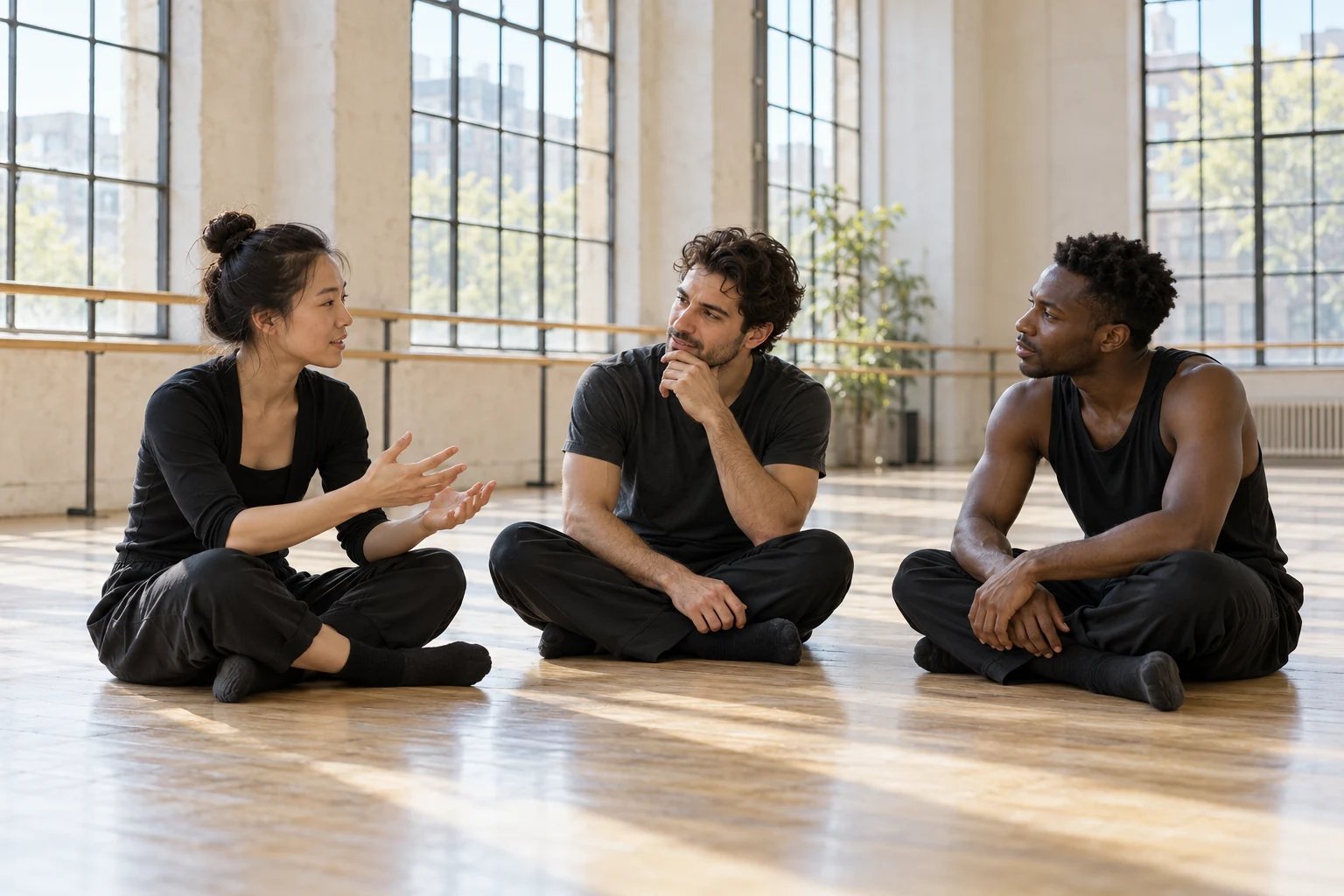
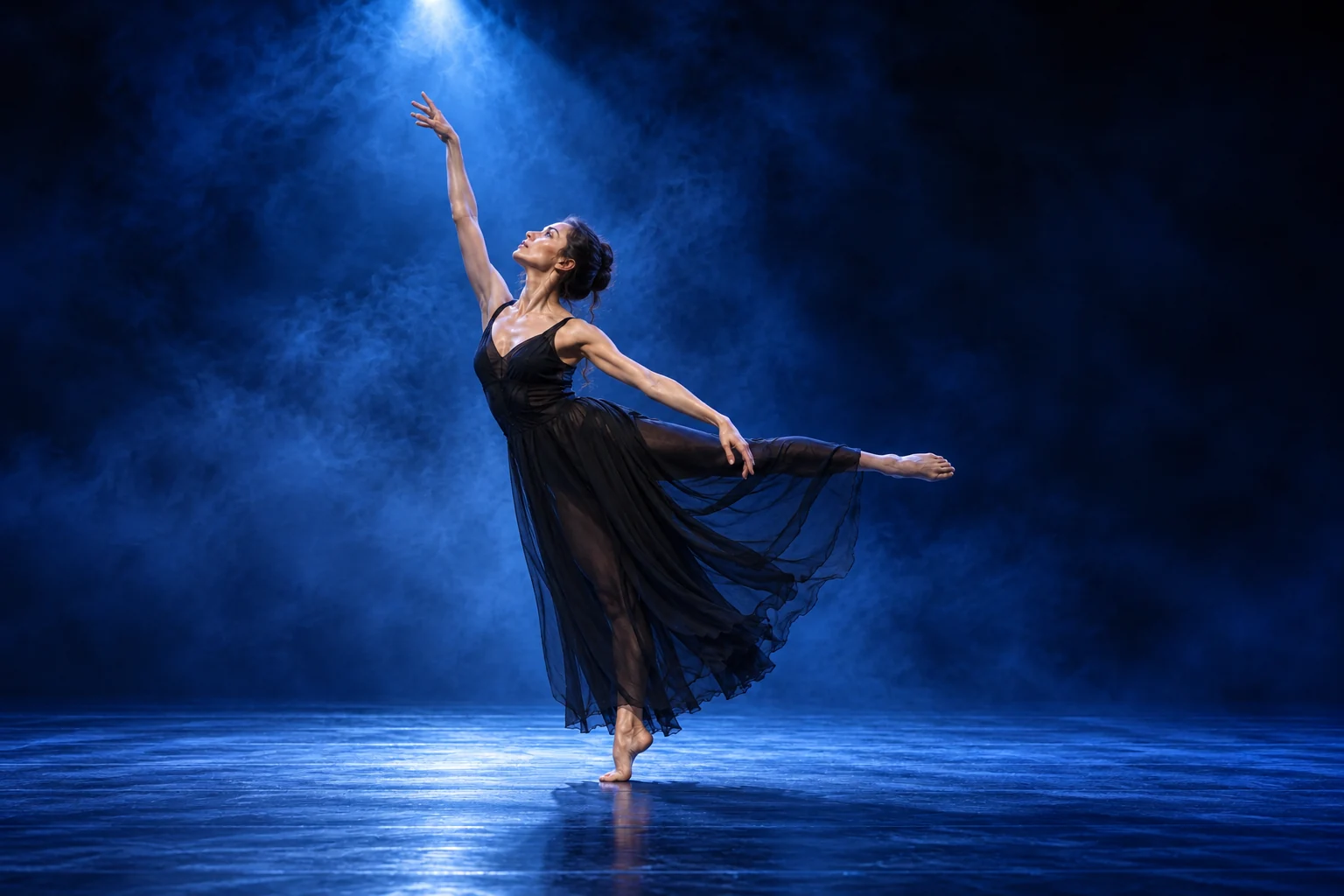
Instead of adding lighting at the end, the team brought a small lighting setup into the studio early. A pool of light could become a boundary to approach or a space to leave. A gradual fade changed how long a movement seemed to last.
This exchange made the light a partner with its own timing. Sometimes it followed the dancer. Sometimes it moved ahead, asking her to catch up or allowing her to disappear for a moment.
Leave room for the viewer
The solo does not tell a dream from beginning to end. It offers fragments: a shape returning, a sound becoming familiar, a gesture that almost resolves. Each viewer brings a different set of associations to those fragments.
The relaxed matinee shares the same work with a different frame around it. Low house lighting and permission to move or step outside can make the room easier to inhabit without changing the curiosity at the centre of the piece.
An original fictional editorial story written for the Kinesis theme.
Back to the journal