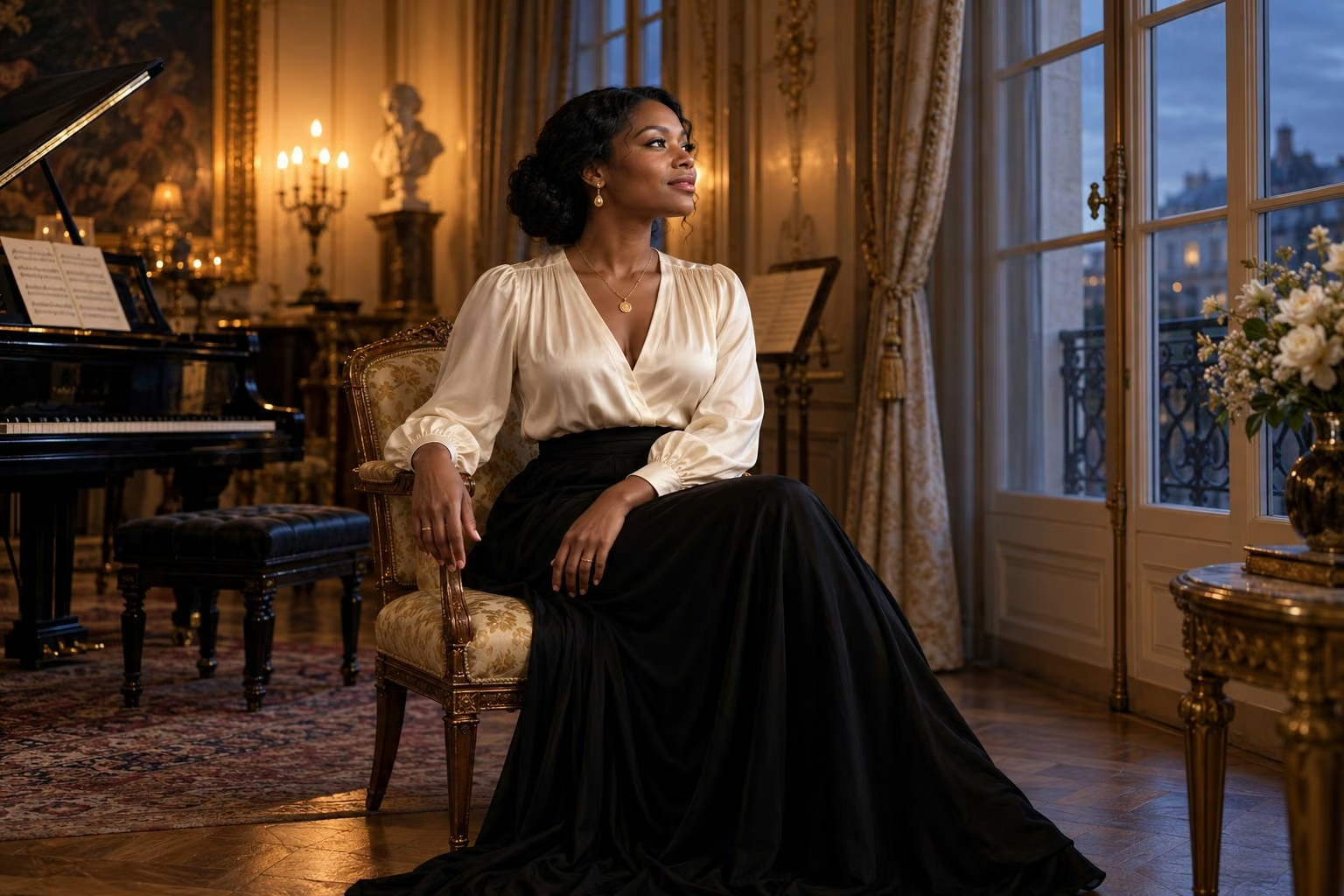
Look beyond the instrument.
An instrument identifies a musician’s practice, but it cannot describe the whole person. Pay attention to their expression, posture and the way they inhabit the setting.
A portrait can carry a sense of work without showing a performance. A relaxed hand or an unguarded moment may communicate more than a formal pose.
Use direction with care.
Offer a small starting point: a position beside a window, a place to rest an instrument or a direction of attention. Notice what feels natural to the person and allow that to guide the next adjustment.
Avoid turning every gesture into a fixed instruction. Confidence and individual expression often develop when the artist has room to respond.
Let the edit preserve a person.
Choose images that feel connected to the artist rather than simply selecting the most dramatic light. A quieter expression may belong beside the more immediate portrait.
The finished collection should offer several ways into the same person. Change scale and atmosphere while preserving a coherent point of view.