Start with a small sequence.
Place a few photographs together and notice their pace. A wider room, a portrait and a close detail each contribute different information.
Repeated strength can become repetition. A quieter image gives a more direct photograph room to resonate, changing the way both are seen.
Notice what a detail contributes.
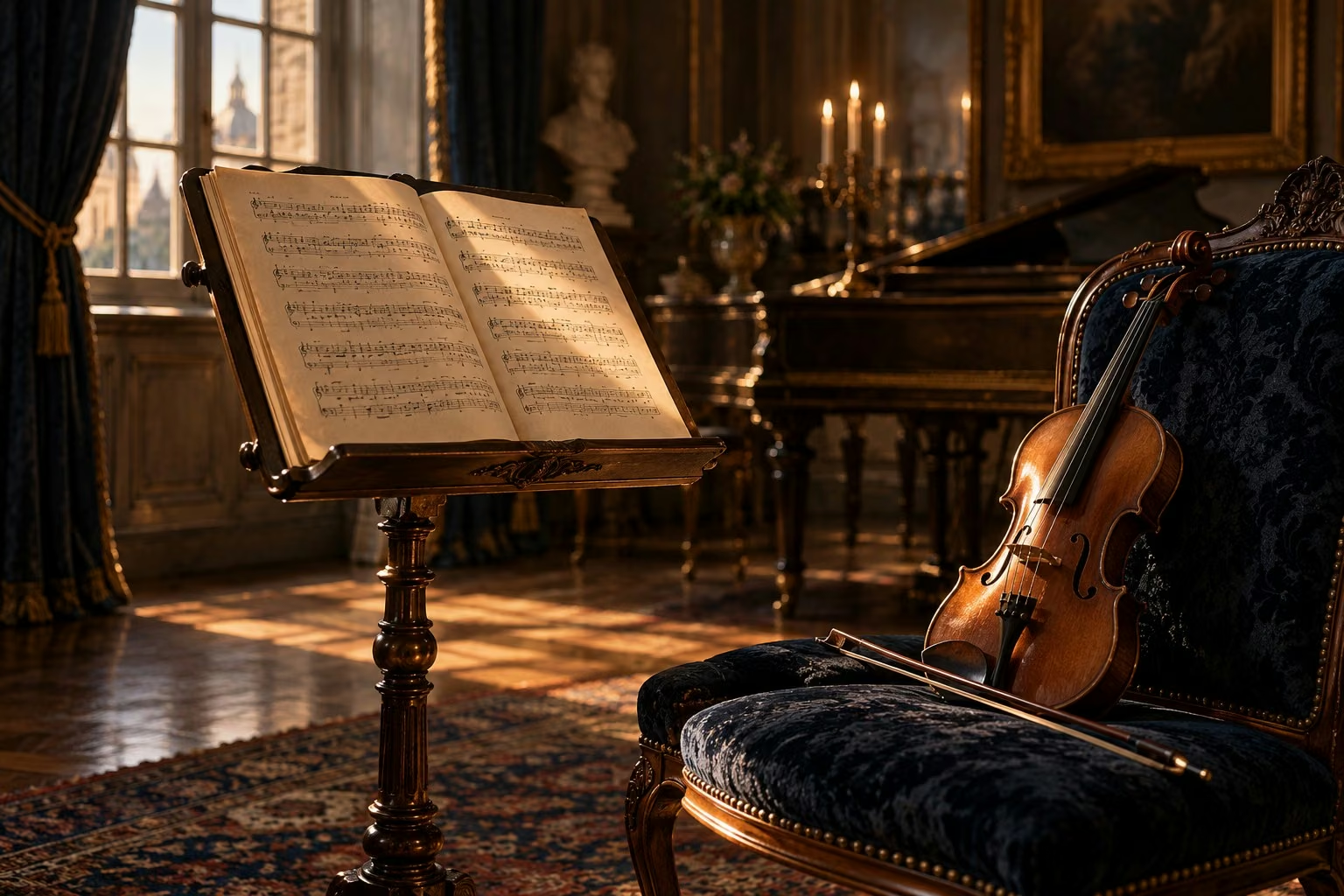
Hands, an open score or an empty chair should add something to the story. A detail is useful when it offers a different way to understand the person or the place.
Ask whether a frame changes the sequence. If it repeats information already present, removing it may help the collection become clearer.
Return to the whole.
After making smaller selections, look again at the complete edit. Notice changes in light, scale, expression and setting. Give the photographs enough space to form relationships.
An edit does not need to explain everything. It should invite a viewer to look more closely and leave them with a considered sense of the work.