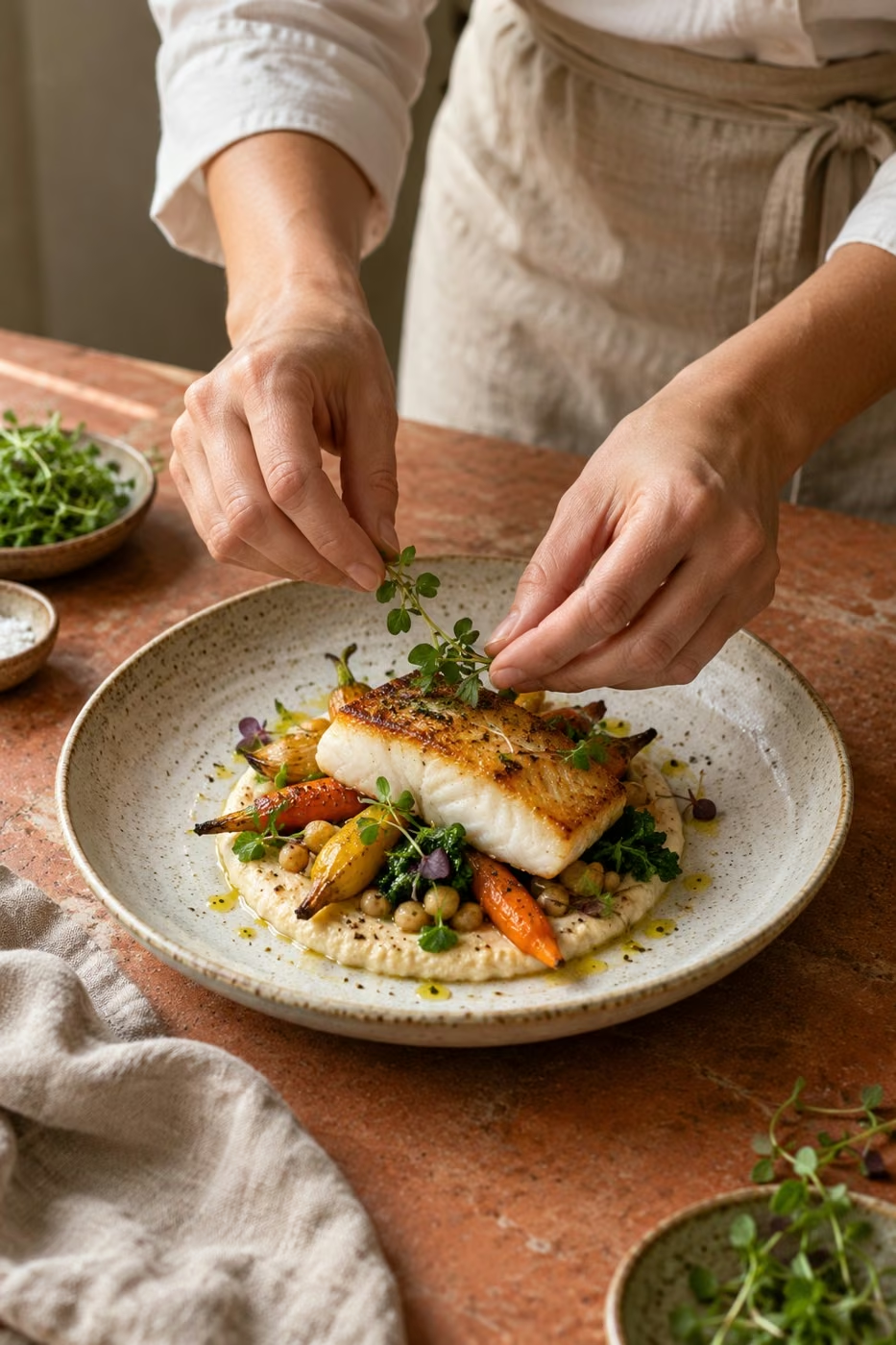
Begin before the dish.
A culinary story can start with an ingredient, a person or the place where the food is made. Ask what gives the dish its character before deciding how to photograph the finished plate.
A well-used surface and a familiar gesture offer information that a polished dish cannot carry alone. Look for details that belong to this particular maker, rather than a general idea of a kitchen.
Make room for the person.
A portrait does not always require a formal pose. The way someone rests a hand, returns to a task or pauses between preparations can suggest a more natural starting point. Explain the photograph you are hoping to make and keep the direction simple.
Working kitchens have their own rhythm. Agree access and timing, make space for safe movement and keep the production from interrupting the people whose work you are there to observe.
Connect the frames.
Place a portrait beside a close detail and a wider setting. Notice what each photograph adds. The strongest sequence can move between scales without losing the subject that holds it together.
An image earns its place through what it contributes to the story. A beautiful detail that repeats information may be less useful than a quieter frame that makes the whole collection feel more specific.