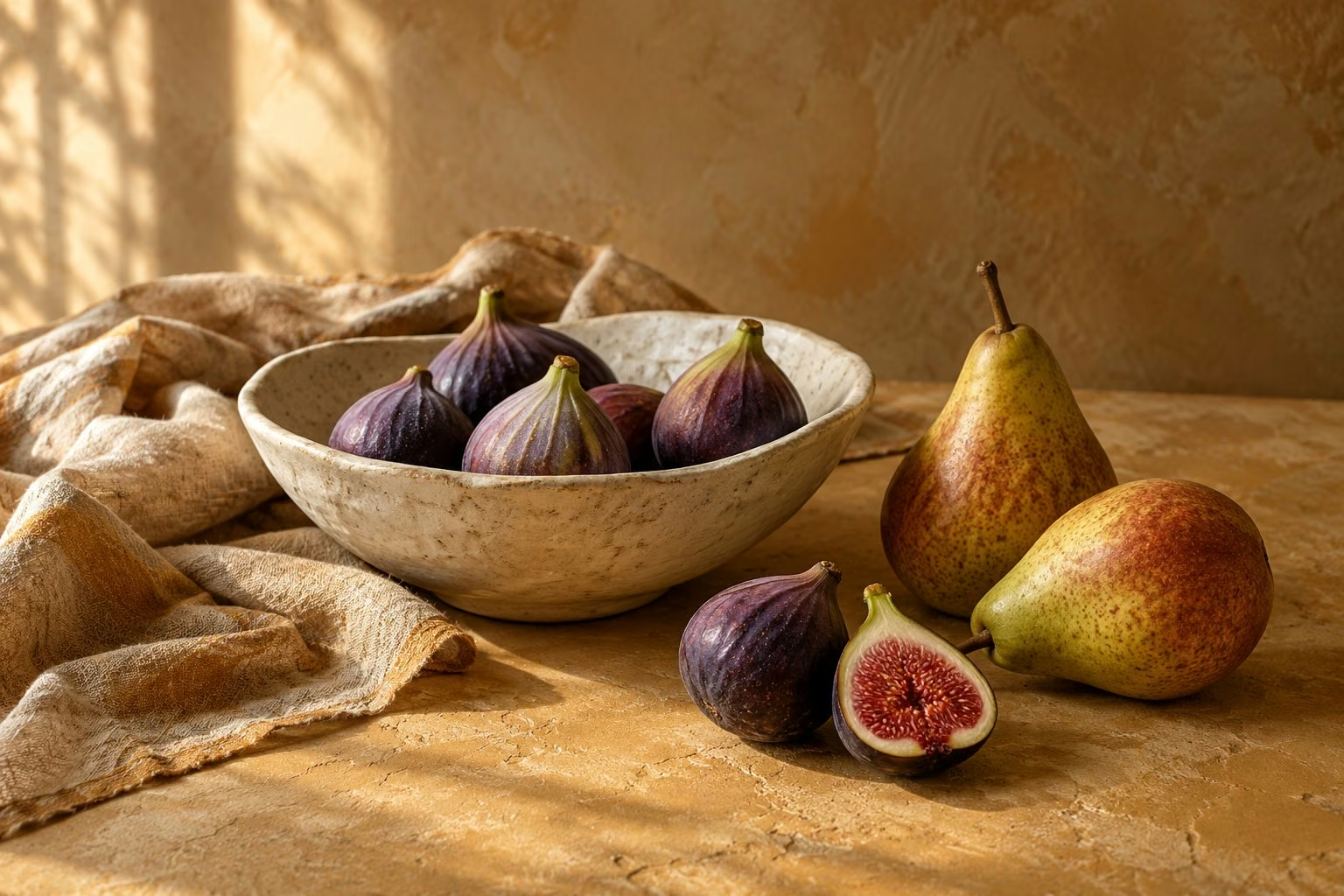
Choose a small vocabulary.
Start with the ingredient and one or two supporting materials. A linen cloth, a ceramic bowl and a familiar utensil can establish a clear world without turning the photograph into a display of props.
The surfaces should support the food through colour and texture. If every object asks for equal attention, remove something and look again. A quieter composition often gives the subject more presence.
Let texture do some work.
A fig has a different surface from a pear. A glazed bowl reflects light differently from linen. Those differences create interest without adding another object to the set.
Look at the edges where materials meet. A small gap, a folded corner or a soft shadow can separate them. Keep the arrangement believable; a little natural irregularity may be the most useful part.
Know when to stop.
After making a few arrangements, return to the first intention. Does the photograph still feel like the ingredient, the season or the story you began with? Styling should make that intention clearer.
Take a pause before the final adjustment. If a change only makes the picture busier, leave it alone. The aim is not an empty frame, but a frame in which every part has a reason to be there.