
Begin with what is already there.
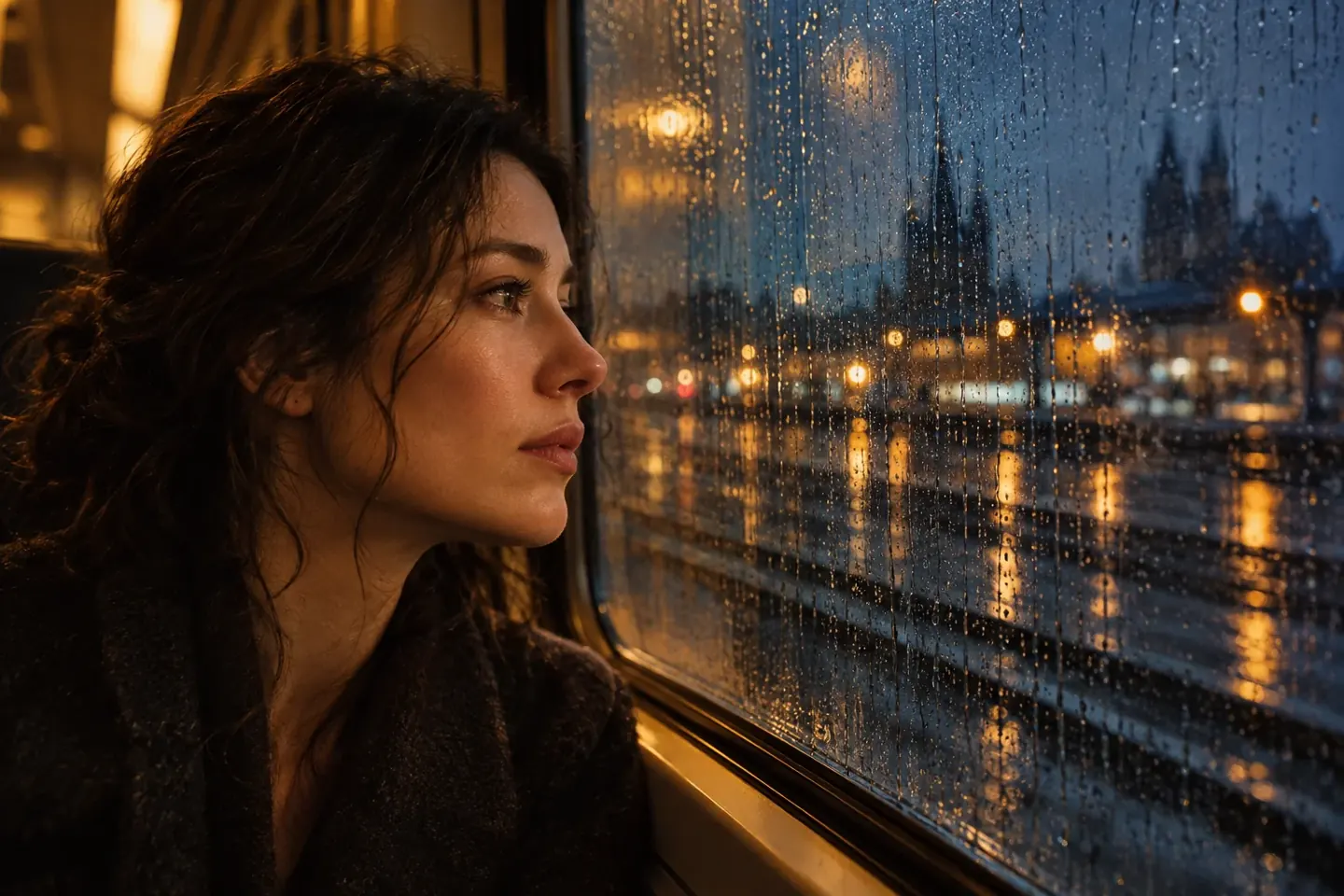
Before reaching for another lamp, look at the light in the room. Notice where it falls, what it leaves in shadow and how it changes the expression of a face. A window can hold a whole emotional register.
Let contrast do some of the telling.
A dark area is not an absence of information. It can create distance, intimacy or uncertainty. The question is what the frame needs the viewer to feel, and how little light can still carry that feeling.
Protect the small detail.
A catchlight, a reflection or the soft edge of a shoulder can be enough. The most useful lighting choice is often the one that makes a gesture easier to notice without announcing the technique.