FORM / SURFACE / FIRE
The process is part of the piece.
An introduction to the material language behind this atelier concept.
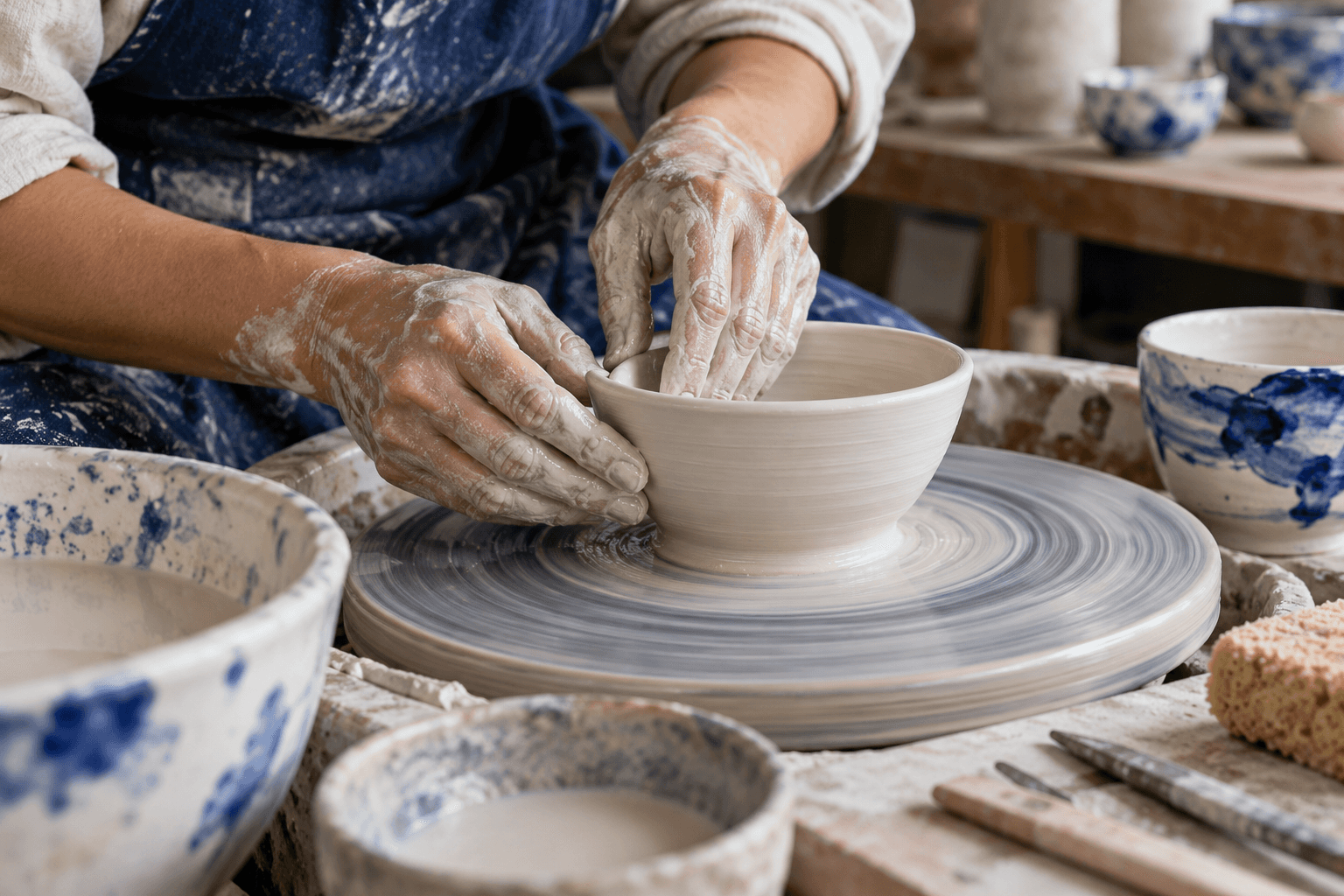
A practice in three movements.
Clay
Choose a body for its texture, forming behaviour and intended use.
Shape
Find a proportion that feels balanced in the hand and on the table.
Surface
Use glaze and brushwork to give the form depth and character.
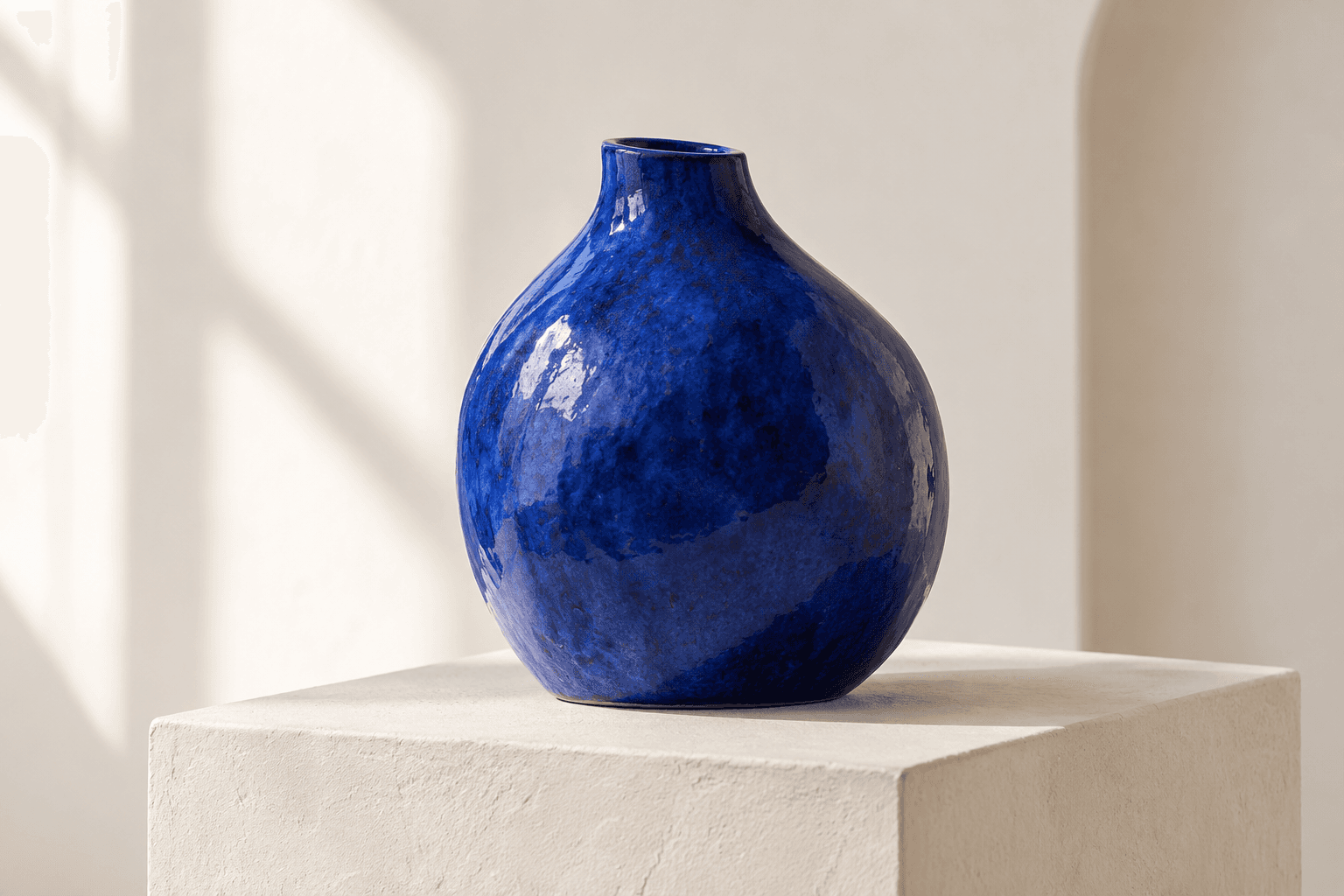
A study in cobalt.
Deep blue moves across a curve with the light. Small variations make each surface worth a second look. These images illustrate a creative direction, not tested product specifications.
Clear information matters.
Testing
Real makers should verify glaze compatibility, firing and intended use.
Product details
Publish accurate dimensions, capacity, materials and care instructions for every item.
Honest imagery
Keep photography representative of the actual pieces offered for sale.
SURFACE / DEPTH / DIFFERENCE
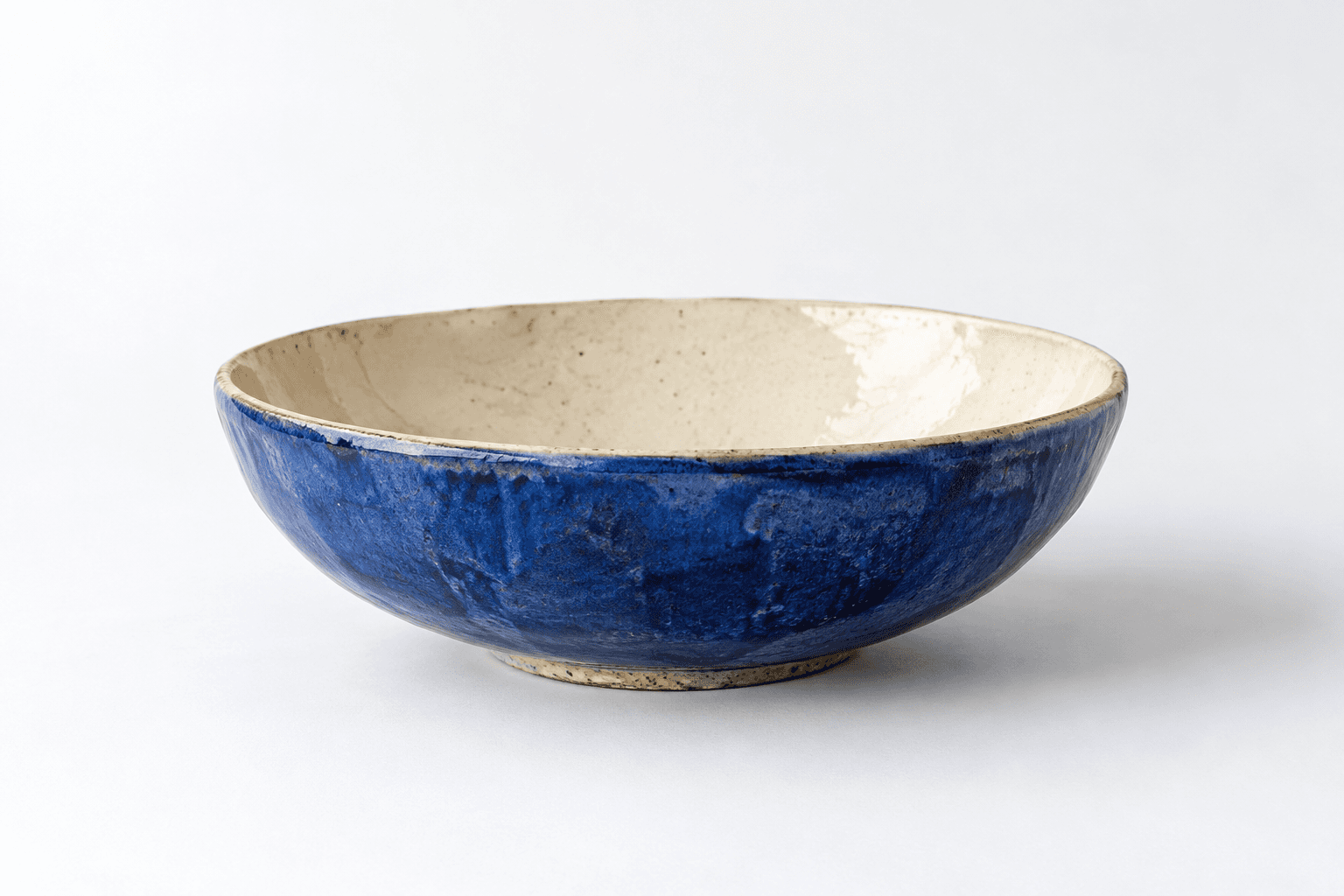
The trace of a hand.
A brush mark follows a curve. Glaze gathers at an edge. These small differences give the collection its visual rhythm and invite a closer look at how an object is made.
A MATERIAL CHECKLIST
Look beyond the surface.
Clay body
Ask the actual maker about the clay used and how it relates to the object’s intended purpose.
Finish
Confirm the finish and any variations you should expect between individual pieces.
Use
Request verified care and suitability information for the specific object before using it.
A place for considered things.
Ceramics, workshops and stories for a slower, more intentional everyday.
FORM / MATERIAL / EVERYDAY
MORA is an original fictional atelier concept by Pitiko Studio. This preview accepts no orders, bookings or messages.