SCENT & COMPOSITION · 5 minute read
The scent wardrobe
A collection of moods, rather than a single signature.
A scent can be a familiar piece of yourself. It can also be a way of meeting the day differently. We like to think of a scent wardrobe as a small, personal collection of atmospheres: one for a bright beginning, another for a quiet evening, each chosen with attention.
Begin with the feeling
Before you look for a note, consider a moment. An open window in the morning. A coat that feels exactly right. A room lit only by the last light of the day. These small scenes can tell you more about what you are drawn to than an elaborate description can.
Ask yourself how you want the experience to feel: open, intimate, warm, luminous. There is no need to decide who you are forever. You are choosing something for the version of yourself that exists today.
Read notes as a language
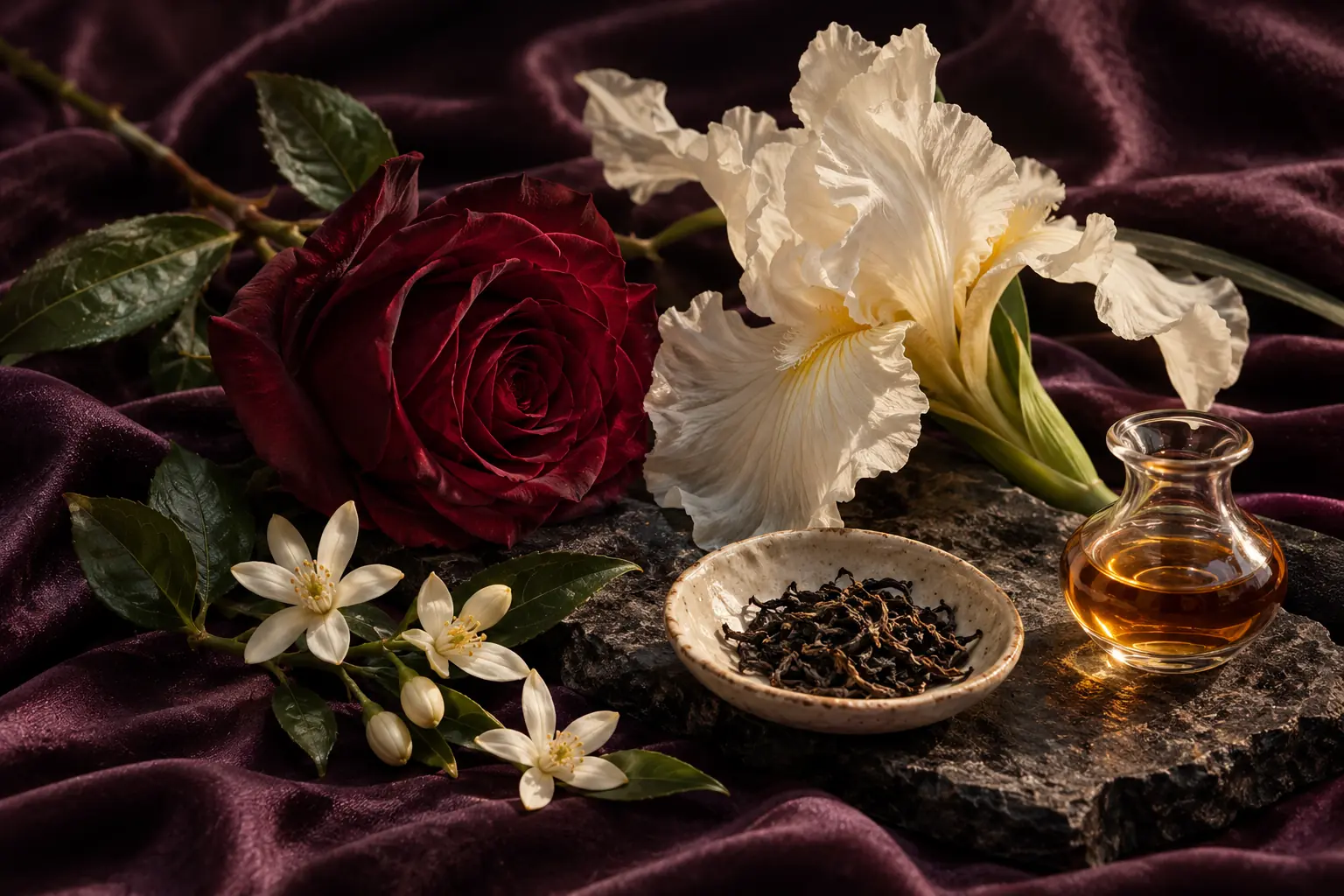
At the atelier, we use notes to describe character. Rose can suggest a petal-soft presence; iris, a powdery texture. Neroli suggests brightness, while the image of tea brings something more contemplative. Woods and amber give our compositions a sense of warmth and depth.
A note list is an invitation to imagine, not a complete portrait. The relationship between the notes matters as much as the individual names. Think of the difference between one colour and a painting: it is the composition that gives an impression its meaning.
A signature can be a feeling you return to, rather than a rule you follow.
Make room for contrast
Velour and Lume begin from different atmospheres. Velour is our intimate expression of rose, iris and warm amber. Lume follows neroli and tea into soft woods. One feels like a room after dusk; the other, a little light held close.
A wardrobe can contain both without contradiction. Choose the softer, warmer story one day and the more luminous one the next. Personal style does not need to be a uniform.
Keep the collection considered
A scent wardrobe need not be large. It might begin with one composition you return to and a second that lets you change the mood. The point is to notice what you enjoy, rather than to accumulate for its own sake.
Think about the moments you already make time for. Getting dressed. Sitting down with a book. Leaving the house for somewhere familiar. A carefully chosen object can become a small marker between one part of your day and another.
Return to your own impression
Descriptions are useful, but your own response is the most interesting part of the story. Which words stayed with you? Which atmosphere could you imagine returning to? Take those impressions into our scent discovery and see which expression they lead you toward.
Then leave room to surprise yourself. The most personal wardrobe is the one that can change with you.
CONTINUE YOUR DISCOVERY
Find your expression