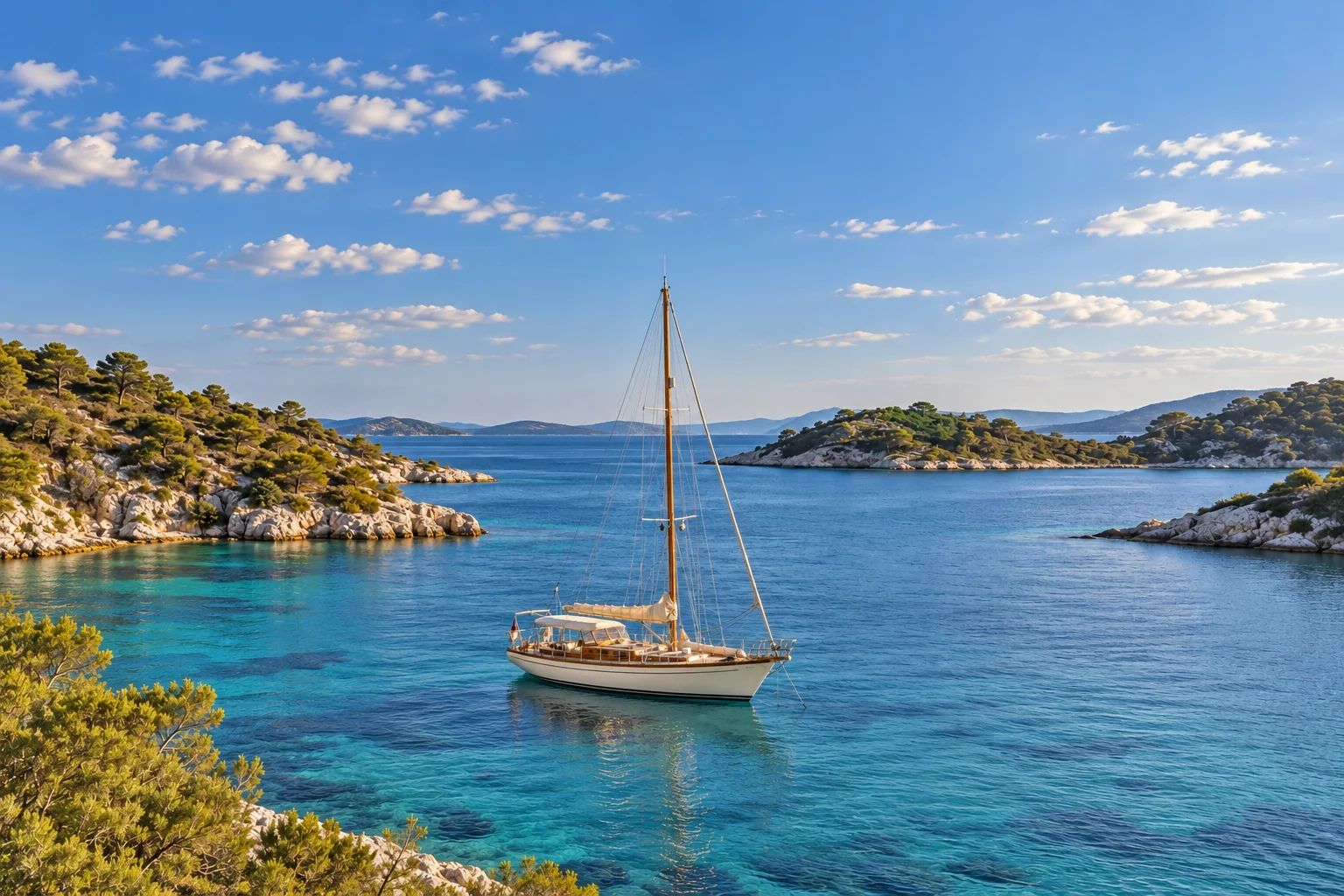
The quiet parts count
An itinerary is usually written around events: a departure, a guided outing, a meal. But a journey is also made of time that has not been assigned a purpose. A quiet hour on deck can become the memory that returns most often.
Designing for that possibility means resisting the urge to fill every gap. It asks us to treat rest and reflection as part of the structure.
One group, different rhythms
People travel together without wanting exactly the same day. One person may be ready to join every outing; another may want a book and a view. A considered plan acknowledges those differences early.
Our private journey concepts begin with preferences: what you hope to experience, how you like to move and how much structure feels comfortable. The answers become a conversation, not an automatic booking.
An outline that can respond
A useful plan gives a journey coherence while allowing it to change. A slower morning, a different anchorage or a return to a favourite place can deepen the experience rather than disrupt it.
The NACRE planner lets you sketch those preferences. It creates a local brief that you can review and download, leaving the practical planning conversation for a real travel professional.