Start with the way a room feels.
Our imagined suites begin with a simple question: what would make you want to stay here for an afternoon? A comfortable seat beside a window, a place to set a cup down, light that feels considered and a clear path through the room. These small choices shape the experience before a guest notices the more formal elements of the design.
Give every material a reason.
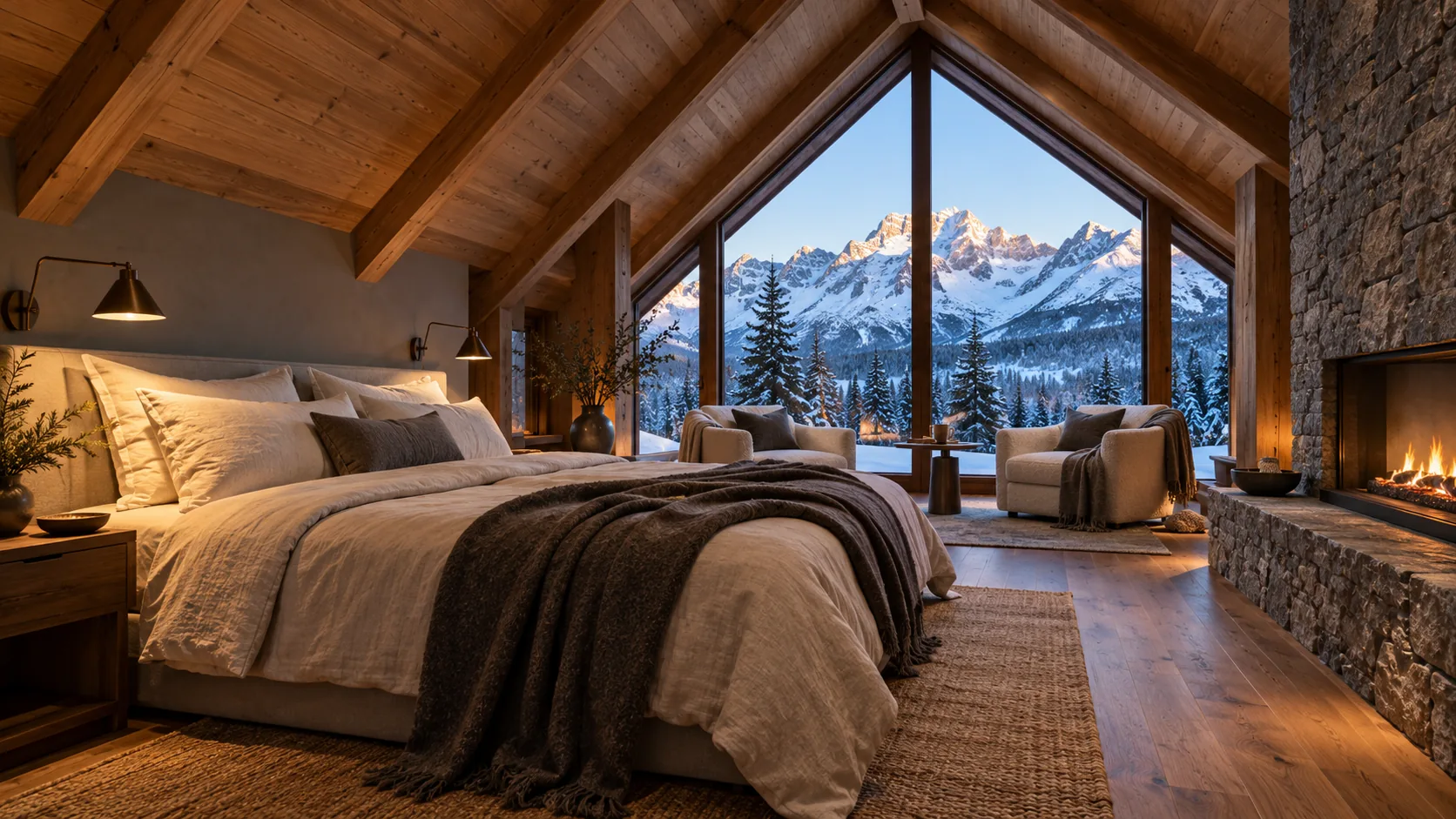
Timber can bring warmth to a mountain room; a mineral palette can sit quietly beside a desert landscape. The aim is not to fill a room with signs of luxury, but to choose surfaces and textures that belong to its atmosphere. A soft throw, a well-proportioned table and an inviting chair do more when there is space around them.
Frame, rather than compete.
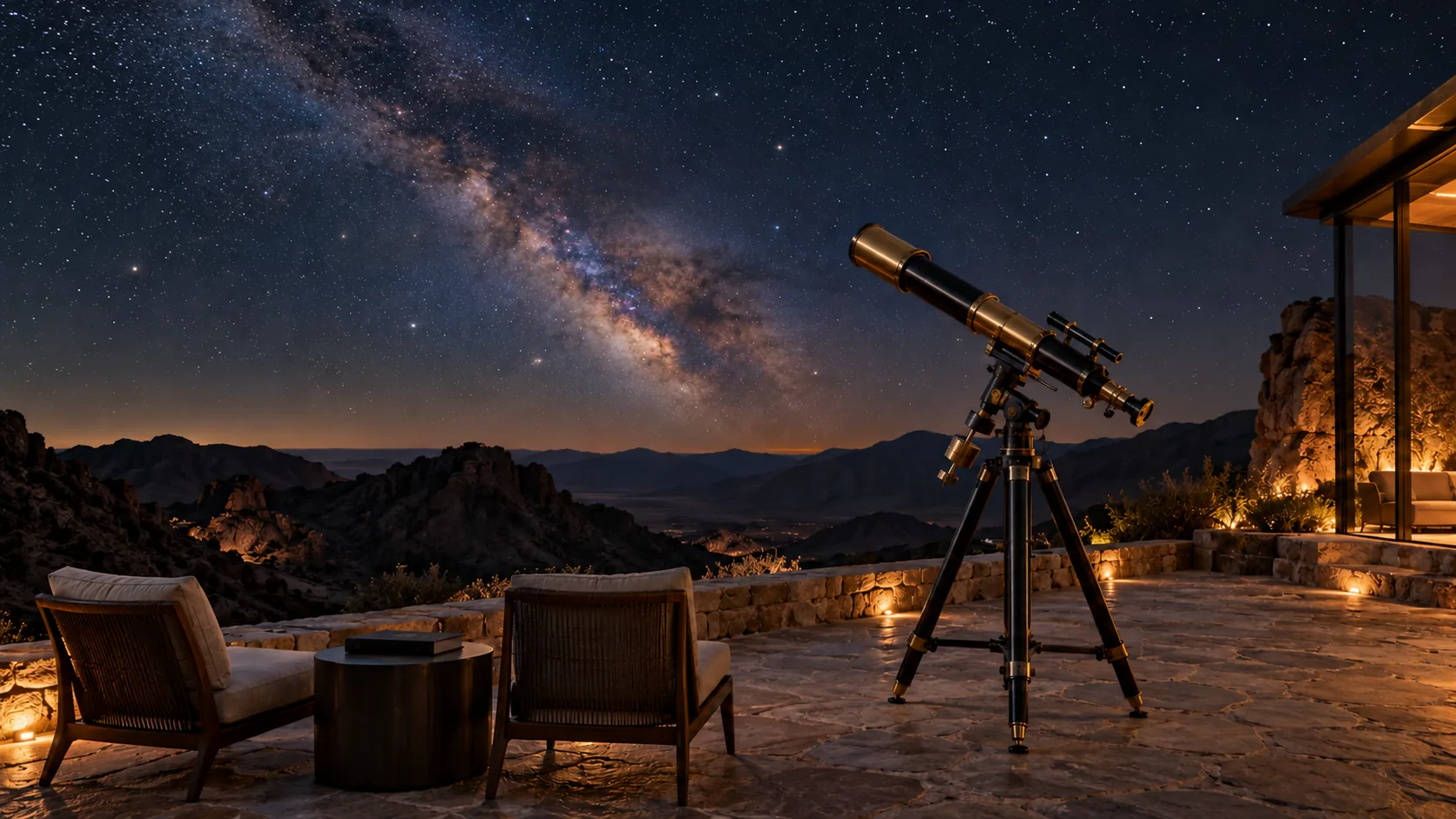
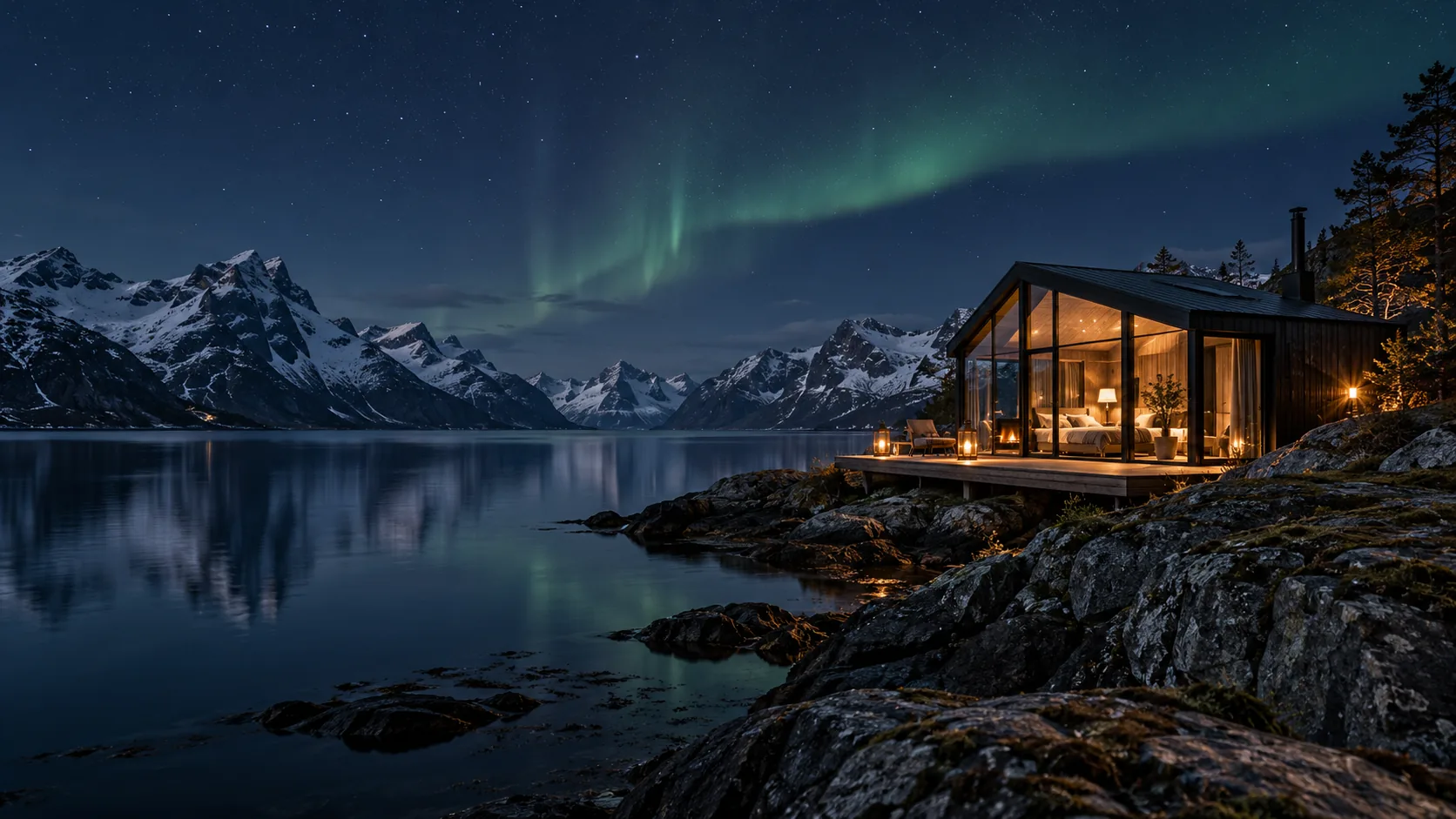
A strong view rarely needs much assistance. In the ASTERUNE concept, windows are treated as part of the room's composition. Furniture gathers around them without crowding the glass. Sheltered terraces extend the space outside, while deeper interior corners offer somewhere to retreat when the weather or the mood changes.
Design for an unplanned hour.
Hospitality is often described through activities and amenities. We are equally interested in the hour between them: a little reading before dinner, an afternoon conversation, a quiet morning while the rest of the house is asleep. A room earns its place in a journey when it makes those ordinary moments feel welcome.
Considered places.
Wider perspectives.