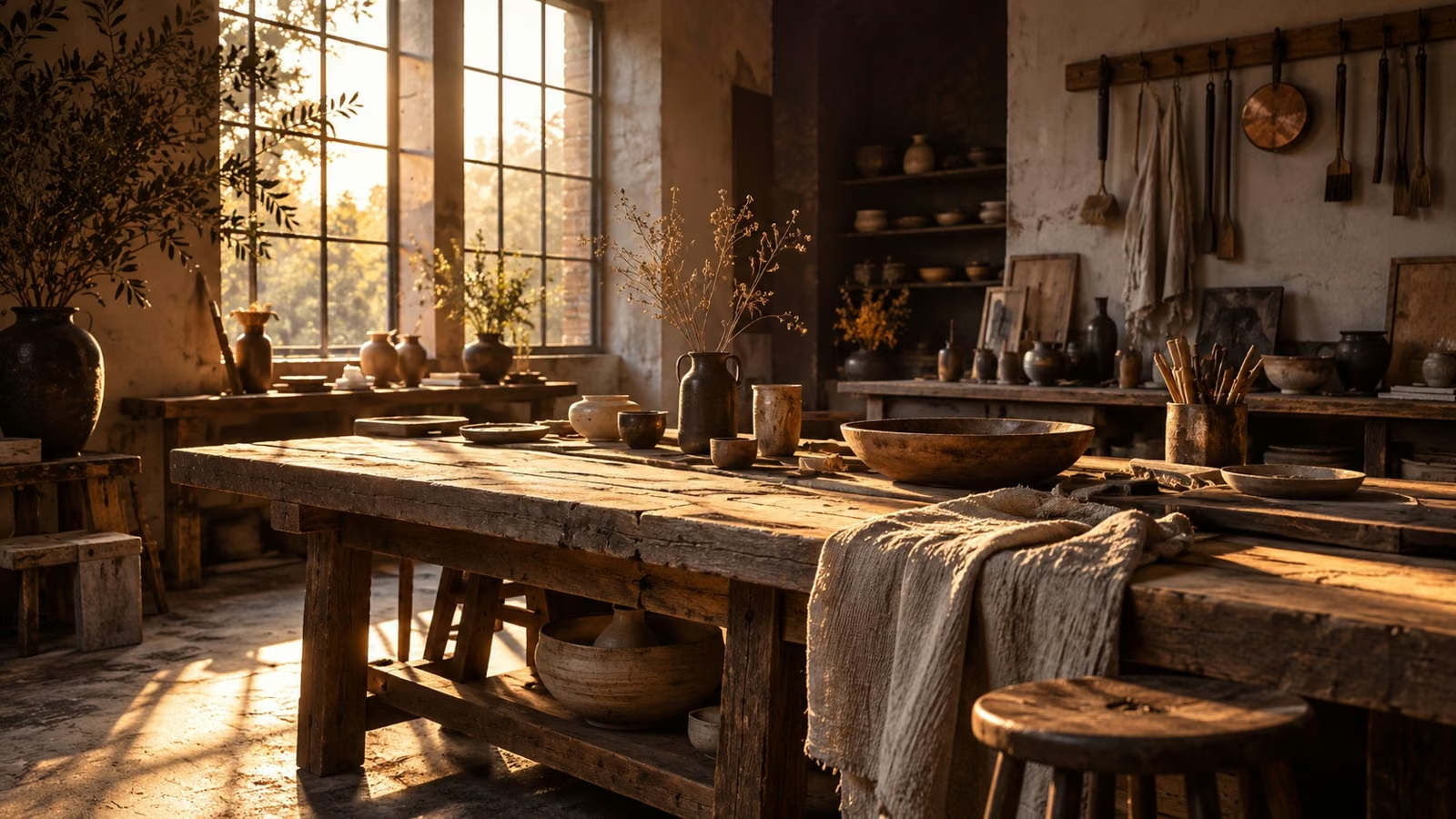
The place is part of the practice.
A workbench, a window and the arrangement of familiar tools can tell us something about the maker before a face enters the frame. A workshop has a visual language of its own.
Begin by noticing the relationship between the person and the space. Where does the work naturally happen? Which areas of light and shadow give that relationship a clear shape?
Avoid arranging away the character.
Preparation makes a session practical, but too much staging can remove the details that made the space interesting. Discuss what belongs in the story before moving it.
A working surface need not look empty to feel considered. Choose a viewpoint that helps the objects read together rather than treating every sign of use as something to hide.
Make room for an empty frame.
A photograph without the maker can still hold their presence. The trace of a process, a chair or an unfinished piece may create a useful change in the sequence.
Return from the empty space to the portrait and notice what changes. The setting may now feel more specific, giving the person a stronger relationship with the work around them.