Begin with the relationship.
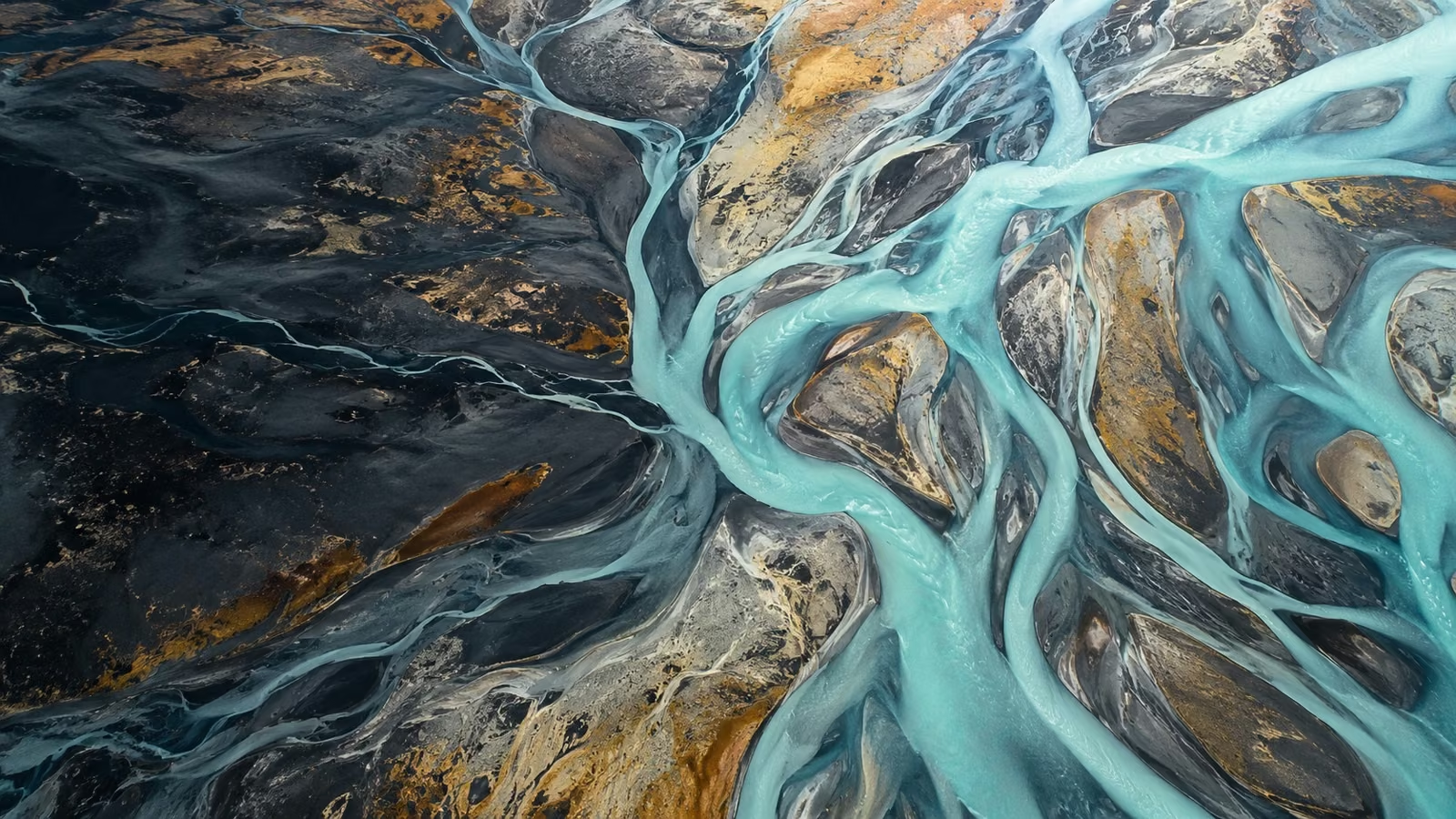
A wider view does more than make a scene smaller. It can reveal how a river connects to a plain, how a boundary changes direction or how a repeated form relates to the space around it.
Ask which relationship gives the photograph its purpose. A clear answer can guide the frame more usefully than trying to include every interesting detail.
Let the line lead somewhere.
A channel or a ridge can give the eye a route through the scene. Its direction matters alongside what lies beside it and where the frame allows it to continue.
Notice the quieter areas as well as the most intricate pattern. A little space can make a more complex relationship easier to understand.
Return to the whole collection.
A photograph with a strong directional pattern can alter the rhythm of an edit. Place it beside a calmer surface study and notice what each image contributes.
The collection does not need every frame to carry the same intensity. A change in scale or density gives the viewer another way into the wider idea.