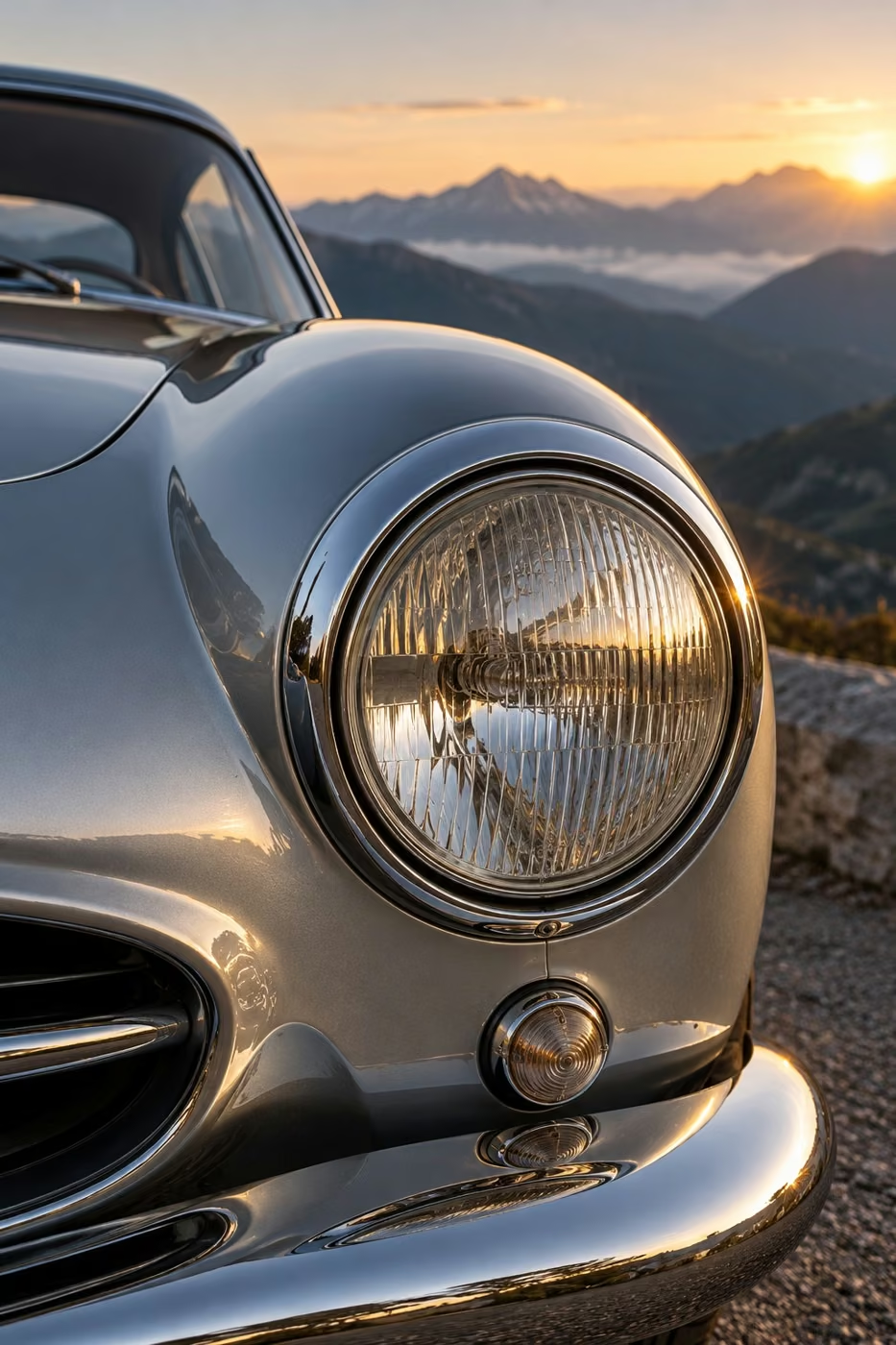
Start by looking at the reflection.
A polished surface shows the world around it. A window, a wall or a bright sky can become part of the shape you are trying to describe. Before adding light, notice what is already reflected in the bodywork.
A small change of viewpoint can turn an interrupted line into a clearer curve. Move slowly and watch one area at a time; the useful adjustment may be smaller than it first appears.
Let shadow describe something too.
Not every part of a vehicle needs to be equally bright. A darker edge can separate one surface from another, while a quieter reflection may reveal more than a dramatic highlight.
Decide where the eye should go and let the surrounding areas support that intention. The aim is a readable form with atmosphere, rather than a collection of bright points competing for attention.
Return to the whole subject.
After working on the smaller reflections, look again at the complete photograph. Does the lighting still belong to the setting and the feeling you began with? A technically tidy surface is only one part of a useful image.
The strongest frame balances form, place and purpose. Leave enough of the surrounding world to give the vehicle a context, then decide what can remain understated.