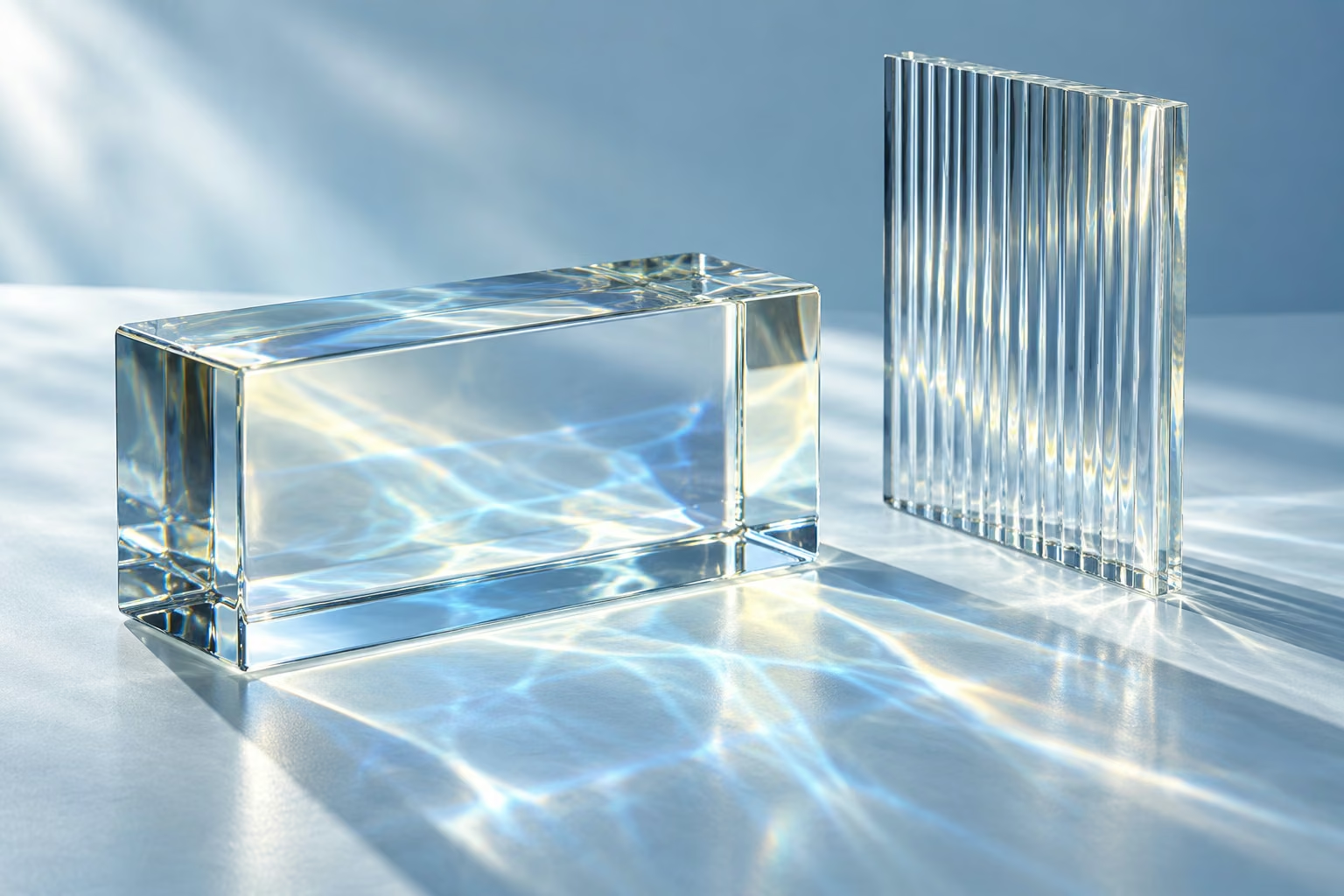
Look through the surface.
A transparent object is also a way of seeing the space beyond it. The background, the surface beneath it and the light around it become part of its appearance. There is rarely one isolated edge to light.
Begin with a simple arrangement and notice what changes when the object turns. Refraction may introduce a useful detail that could not have been planned precisely in advance.
Leave room for the unexpected.
Glass can produce small shifts in colour, scale and direction. Some clarify the subject; others become distractions. Give the experiment enough time to reveal the difference before adding more elements.
A single transparent form may be enough. The relationship between its edge and the surface behind it can hold more visual information than a complicated arrangement.
Choose what the frame should keep.
Once a useful relationship appears, compose around it. Check the entire object as well as the closer detail, and leave enough room for the image to be used in the formats agreed for the project.
The final photograph does not need to explain every optical effect. It should give the viewer a clear way in, with something more to notice on a second look.